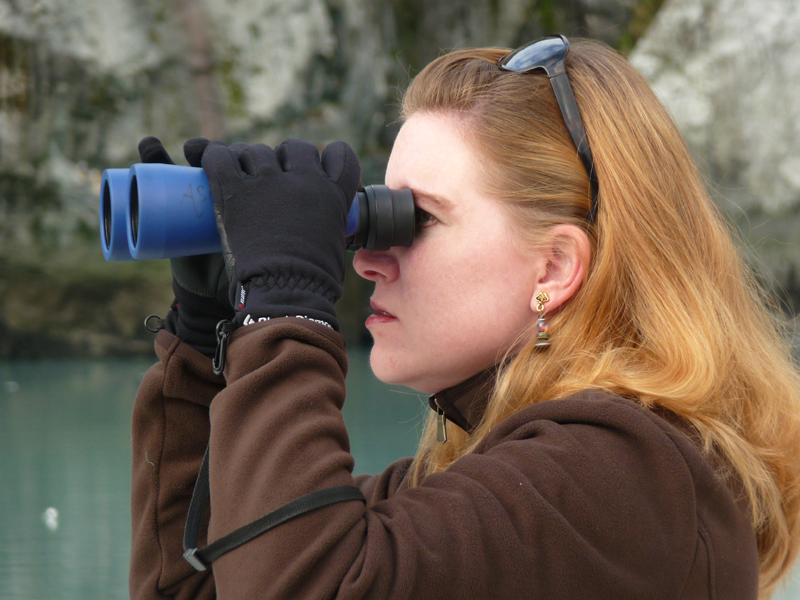
Scanning Glacier Bay for humpback whales and sea lions
Travel writing is no way to earn a living. (That’s why I also write about everything else under the sun.) But it’s a darn good way to see the world in a way you might not otherwise see it. Why? Well, mainly because serious travel journalists don’t typically sign up for “Norway in a Nutshell” tours or consider seeing Glacier Bay by sailing past icebergs on a gigantic cruise ship.
Travel writing takes a certain amount of courage. Not the writing part. But the being part. If you want to write something people want to read, you’ve got to be willing to put yourself out there and do wild and crazy things, strike up conversations with complete strangers, and remain perfectly placid when a random Frenchman sticks his finger in your stinky cheese.
Of course, you don’t have to be a travel writer to do any of this. If you want to see the world with new eyes, just act like a travel writer. Skip the “See Europe in 12 Days” tours and forget the drive-by sightings of grizzly bears in Yellowstone. Instead, immerse yourself. Rent an Italian villa for a week and drink wine with every meal, and instead of peeking at that grizzly through a telescope, take a hike up Mount Washburn. The key is to get dirty. Here’s how to get started….
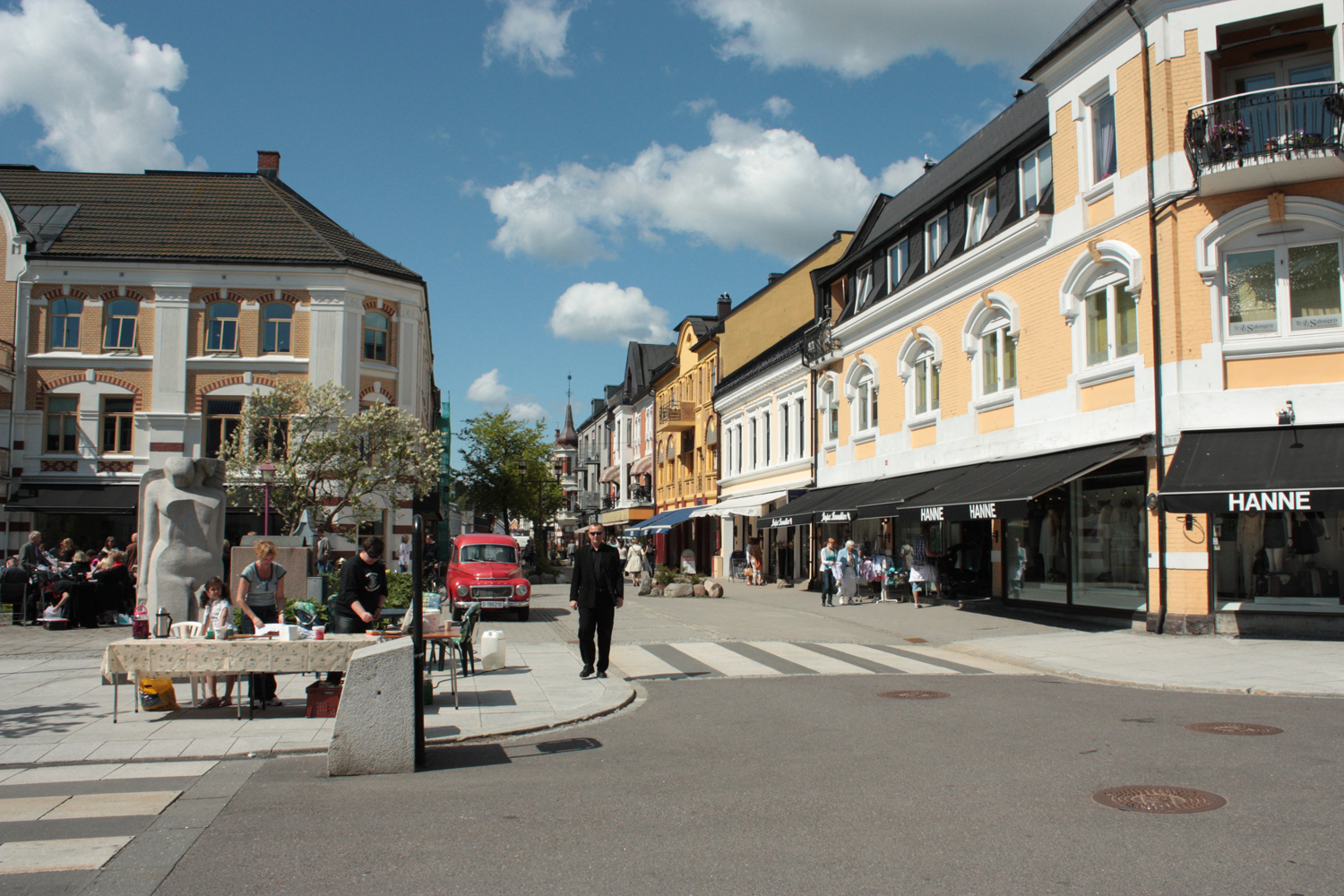
The picturesque Rue St. Antoine in the old quarter of Cannes
1) Explore the back streets. Yes, so it seems obvious. Get off the main tourist strips. But if it’s so obvious, how come no one is doing it? If you really want to get to know a place, leave the madding crowd and hit the back streets. A case in point: when I was in Cannes, France, last fall the Boulevard de la Croisette—the hip (and expensive) shopping street lined with boutiques and department stores—was jam packed with tourists. It’s not like I could afford to buy anything in a place like Alexandra where all the movie stars and “ladies who lunch” shop anyway. So I just started wandering down the side streets. Not only did I find myself taking in views of the entire city and long stretches of the French Riviera from the Musée de la Castre on a high hill overlooking the Mediterranean, but I also found some delightful (and less expensive) shops and restaurants patronized by locals along curving back alleys. When my friend, Dorothy, and I sat down for lunch at a tiny outdoor cafe in Le Suqet behind the more heavily traveled Rue Georges Clemenceau, we not only spent our meal enjoying the sounds of French-speaking natives all around us but had the delight of drawing the attention of locals walking to work, one of whom stopped to show us how to eat our artisanal cheese plate, poking our cheese with one rotund finger and advising us to start with the mild chevre before moving onto a French version of Stilton. And did I mention our French waiter, who got a kick out of Dorothy’s accidental thank you’s in Spanish, also gave us complimentary shots of what he gleefully termed “fruit juice” at the end of our meal? And that was on top of the house wine at only $2 a glass.
Unexpected drama climbing the Kotor Fortress
2) Don’t make any plans. That was how Dorothy and I took on the lovely medieval city of Kotor, Montenegro, on the Adriatic Sea. The result? A fantastic and unplanned hike up the side of a fjord to explore the city’s centuries-old fortress, restored with money from American citizens. We stumbled upon the trail when walking down back streets in the old city, looked up the steep steps curling up the mountainside, shrugged, and said, “what the heck?” An hour or so later, we were enjoying the most magnificent view of our entire trek through southern Europe. Not as good as Norway, of course, but still pretty damn good. 3) Or make a ridiculous plan, and see if it works. Sometimes, however, more fun than winging it is trying to navigate your way through another country (or two or three) via the Internet. That’s what I did when my former husband and I decided to visit Northern Europe two years ago. Trying to figure out how to get us from Sandefjord, Norway, to Kiel, Germany, in a way that would be far more interesting than a flight to Hamburg, I planned the most absurd 24-hour journey from Point A to Point B ever. My husband was convinced it could never work. It began with a short train trip from the Sandefjord airport to city center, a long walk to the wrong ferry terminal, followed by a wild taxi ride to the correct one 30 kilometers away in Larvik, and a four-hour journey by ferry across the Black Sea. (Did I mention Color Line offers a fantastic Norwegian buffet of cold fish, cheese, salads, flatbread, and Scandinavian pastries?)
Sandefjord, Norway: Jumping off point for a 24-hour plane, train, and boat ride to Kiel, Germany
Once in Hirtshals, Denmark with the sun setting, we hopped on a train, making countless middle of the night connections, including a startling encounter with college students participating in Carnival (one of whom sat in my husband’s lap and another of whom sat on the table in front of my seat with her scantily covered thighs just inches from my nose) and a four-hour stopover in an outdoor station at Fredericia, where I spent hours dancing on cement to keep warm (And no, no one was there at 3 a.m. to watch.) The next morning we arrived in Kiel, exhausted and amazed that we had made it. “I gotta hand it to you,” my husband said, “I never thought this plan of yours would work.” Truth be told, I never thought it would work either.
Wandering the back streets of Barcelona
4) Talk to the wait staff. They live here, you know, so don’t treat them like background music. Strike up a conversation. You might be surprised at what you’ll experience and what you’ll learn. In Barcelona, I chatted with a bartender who knew no English and a smattering of French. I, on the other hand, knew almost no Spanish and spoke only passable French. Somehow we managed to communicate in a fascinating mixture of three languages. And then there was the cruise ship waiter from Honduras who happily answered all questions on the inner workings of the dining room and staff life on a giant ship. Plus, he offered nightly demonstrations on how to balance forks on wine bottles using toothpicks (and who couldn’t use a new parlor trick every now and then?). Meanwhile the Serbian sommelier offered the inside scoop on what and what not to drink in Montenegro as well as insight on the economics of being in the culinary industry in Eastern Europe in the wake of civil war. A darkly handsome man with a thick and decadent Serbian accent pouring me wine while giving an up close and personal history lesson…I’m sold!
No map, no problem: happily lost in Pompeii
5) Be open and approachable. Wear a smile, and almost everyone will want to be your friend and help you, even if you don’t ask for it. Like the conductor on a train Dorothy and I took from Naples to Pompeii. He could speak no English but knew we had taken the wrong train (even though we ourselves did not know) and began to offer us aid with hand signals and requests for help from other English-speaking passengers…of which there were none. But we smiled and made our best efforts to communicate in our pathetic and miniscule Italian vocabulary (and, by the way, never visit Italy if you don’t speak the language because if anyone there speaks English, they’re not letting on). He eventually enabled us to shift to another train to get us to the ancient ruins of Pompeii instead of Sorrento, saving us what could have been an hour or more of wasted time backtracking in a region of Italy that is none too safe anyway. (Did I mention we were nearly mugged at the train stationin Naples and escaped the situation with some very fast walking?) Thank you, Neopolitan conductor, for saving two semi-clueless Americans from further trouble….
A friend recently forwarded me an essay in which the columnist referred to men as “fixer- uppers” and noted that an acquaintance of hers actually claimed to have “fixed up” her “fixer-upper” husband.
Being a builder’s daughter, this got me thinking. I grew up under the tutelage of a man who made me believe that anything could be fixed, no matter how complicated. Granted, the fixing might involve a lot of time, trouble, and cursing…and maybe even the use of a sledgehammer. But nothing was unfixable.
That seemed to be the take of the woman who claimed to have “fixed up” her spouse.
But this begs the question: do you really want to marry a fixer-upper? Because it’s going to require the same kind of investment as a fixer-upper house…unless you’re okay with all the leaks, rot, and cosmetic deficiencies. And most of us just aren’t. Plus, if the fixer-upper is so bad that you need to use a sledgehammer and start gutting the whole thing, well, that’s the sort of work you want to leave to a professional.
Unfortunately, for me, it took me awhile to learn this. Builder’s daughter: anything can be fixed. Sure, if you want to spend a lifetime doing it. Meanwhile, you could have just bought a well-built house (or man) to start with.
I’ve fixed up a couple of houses. Scraped paint off of rotting window sills, replaced shingles, ripped out shag carpet, even jacked up a foundation once to replace the rotting sills underneath. And while the experience of all this home remodeling eventually led me to the conclusion I wanted to build a new house from scratch instead of trying to make old and icky ones work for me, I did not take that wisdom into the realm of dating and marriage. Somehow I thought if I could be the general contractor on a home renovation project, I could also be one on a man renovation project.
Unfortunately, being the kind of “let me test the limits of my abilities” kind of person that I am, I selected whole house gutting projects. (I hope my former spouse is being honest when he says he doesn’t read this blog, but if he is reading this, perhaps he’s been fixed up enough that he’ll think it’s funny….) My experiences have run the gambit from trying to make a compulsive liar stop lying to trying to make a guy with zero self-esteem pick himself up and do something. These were projects for people with PhD’s in psychology, not for an English major with home improvement background. I was way out of my league.
If you have to jack up a guy’s foundation because it has rotted away, you’re in serious trouble. It’s like a friend said to me not too long ago when talking about whitewater kayaking: “If you get into big water and don’t know what you’re doing, you could get really hurt.”
The same applies to home renovation and relationship building.
But there is something to be said for “trial and failure.” You learn a lot. I never got the compulsive liar to stop lying. (I finally gave up on him after helping him write stellar job application letters for several months only to find the unmailed applications stuffed into the glovebox of his car.) And I never got the guy with trampled self-esteem to believe he was worthy of love and success either. (Though I gave it the good old college try—something along the lines of taking seven or eight years to get through college because you keep failing the same course over and over.) I’d like to think I can now recognize a major fixer-upper a mile away.
Not that I’m looking for perfection, mind you. I’m okay with a few squeaky floorboards, some air leaks around the windows, and maybe even some scratched up cabinetry. I can live with imperfections on that scale as long as the big picture looks good. But if I see any faulty foundations or caving in roofs, I’m heading for the hills.
Of course, I realize some of my gentlemen acquaintances are going to be quite happy to turn the tables on me here and talk about “fixer upper” women. And I realize on the male scale of renovation projects, I might look like a property deserving of demolition given my propensity to do things that men find extremely annoying…like write blog posts such as this one, for example.
But that’s okay. We could all use a little self-improvement. The thing to remember, however, is that people aren’t like houses. You can’t just go in and start tearing things out and putting in new plumbing. If the guy (or gal) you’re with doesn’t want to improve himself (or herself), no amount of fixing on your part is going to do any good. (Which is why I am suspicious of the woman who claims to have “fixed up” her husband.) You’re wasting your time, your life. Move on, get over it, and find something (or someone) that doesn’t need repairing.
I’ll admit it. I’ve done a few crazy things for men. Like pretending to enjoy watching a boyfriend participate in some bizarre World War I re-enactment that actually involved mud and trenches but really looked like a bunch of grown men playing dress-up in the great outdoors.
Then there was the boyfriend who tried to teach me fly fishing. (Why I agreed I’ll never know, as I consider standing in a stream or at lake’s edge with a fishing pole about as exciting as watching paint dry.) But I tried it nevertheless. I wasn’t at it five minutes before I had my line tangled in a crabapple tree.
And I must not fail to include hanging out in the pit at a race track, the dirt from the track flying so thick that it later took two showers to get all the grit out of my ears and several flossings to get it out of my teeth. Not to mention the two beer guzzling guys who walked past me, saying, “Dude, I bet we’ll find some hot women here tonight.” (I should probably mention my S.O. at the time was a race car driver, not a spectator, which basically means he did not own a T-shirt with a Confederate flag on it with the sleeve rolled up on one side to show off the tattoo of his mother’s first name.)
True, I’m not very P.C. I can’t help it. I call it like I see it.
Which is why I feel compelled to point out that I quickly learned we should all have our limits. Mine was one re-enactment and two dirt track races. (I liked the second guy better.) And I’m inclined to think, now that I’m older and wiser, that my limits might be even more stringent these days. A guy would have to be Mr. Wonderful for sure to get me to bungee jump off a bridge in New Zealand. Basically, he’d half to be flawless. And I’m still not sure I’d do it.
So I kind of wonder why women do so many crazy things for men. Are we really that desperate? So desperate to hold their interest and affection that we take up their crazy hobbies or at least stand on the sidelines watching them with enough regularity that we start to look a little bit…well…desperate.
Learning archery in the Ozarks
It hit home with me the second (and last) race I attended. Somehow I had convinced myself I was being supportive by spending a lovely spring weekend driving God knows how many hours through central North Carolina (the armpit of the state, in my opinion, with all its look-alike cities, interstates, and giant junk outlets) to the dirt track in Gastonia in a really big pick-up towing a sprint car (which if you don’t know what that is, ladies, it’s the one with the really big rear wheels and the Orville Wright-esque roof that makes it looks like a cross between an airplane and a go-cart). I spent most of the day in the pit sitting on a tailgate reading a biography of William Faulkner for an article I was writing while the wives and girlfriends of the other race car drivers dished out elaborate buffets of fried chicken and biscuits, tested all their video recording equipment, and began climbing up on the roofs of their S.O.’s six-figure price tag towing vehicles to see if they could videotape the races from there. When race time rolled around, each one of those ladies lined up alongside her husband’s car, his helmet in hand like a squire waiting to tend to a knight. That was the point at which I started to feel weird and decided the so-called fine line between being supportive and being pathetic was actually not so fine after all.
After that episode, I showed my support by not raising hell on the weekends my boyfriend decided to spend at the track and stayed home where there were much more interesting things to do than fawn over a weekend warrior race car driver.
But I’m not alone in having made some ridiculous efforts to impress a man with my supportiveness. A friend of a friend who was planning a romantic getaway to Hawaii with her fiancé recently relented when he suggested they go camping in Utah instead…in a Winnebago…a very old Winnebago. Driving cross-country for three days, camping for five, then driving back. And in the interim, their meals would be tuna out of a can and the romance would be lovemaking in the back of a van. Sure, it’s a little reminiscent of the teenage years in a way, but who wants to make out in a stinky van at age 40? I’m personally all for the luxury hotel mattress.
I’m sure the lady in question is, too, so why won’t she admit it, hold firm, and buy those plane tickets to Hawaii?
Yeah, you guessed it. For some reason, she feels that in order to hang onto the guy she has to sacrifice her sanity…and her precious vacation time. You might be desperate if you do this, ladies.
The view from my kayak along Pictured Rocks National Lakeshore
Another friend of mine has an even more interesting track record. In the course of her relationship career, she has purchased a bass boat, a motorcycle, and a kayak. She still has the kayak, and I think she actually uses it, but the bass boat and the motorcycle have long since hit the pavement. I’m not even sure she actually ever got on the motorcycle. The purchase, I think, was a gesture of intent.
And apparently good intentions work, as she did marry the guy. He goes duck hunting and motorcycling without her these days, much to her relief, no doubt.
Women may claim that men, once married, suddenly forget how to cook, dance, and kiss, but women are guilty, too. Our “tactics of desperation,” as I like to call them, suddenly cease once we feel we have the guy cornered. We magically lose interest in skeet shooting, football, and black lingerie. (Well, some of us do anyway. Personally, I would never want to be caught in Grandma panties by an EMT following a traumatic car accident, and I do know a woman who makes cupcakes with her husband’s picked team’s logo emblazoned in the frosting for the Super Bowl each year.)
A friend of mine actually asked me to write this post after deciding a couple of her women friends were acting a little too “desperate.” At the time, I agreed with her that there are just some things you don’t do for a man, any man.
But then I got to thinking about it and, pathetic Super Bowl cupcakes aside, all this stretching of ourselves beyond normal limits isn’t necessarily a bad thing, not always. Sometimes acts of desperation turn out all right. I would never have discovered a love of sea kayaking had my former husband not goaded me into trying it out off a sandy beach in St. Croix. Nor would I have learned how to shoot had a boyfriend not introduced me to the sport more than a decade ago and enticed me to at least learn how to blast a rabid skunk…or a rabid neighbor…if I needed to. And frankly, I think if I’d been permitted a spin around the racetrack (instead of standing on the sidelines), I might have found that a little bit more interesting, too.
This is not to say I’m encouraging acts of female desperation, which seem to be most common in the unknowing years of the early 20s and the “oh, my god, I am never gonna get married unless I take up skydiving with this guy” years post 40. It’s okay to get your feet wet in something new, just so long as you’re not sacrificing your own sense of self to do so or stretching limits that you’ve put in place for very good reasons. Moving in with an S.O. who owns 12 indoor dogs when you are a stickler for cleanliness is not likely to do anything for expanding your horizons or enhancing your relationship. This is a guy it’s even questionable whether or not you should be dating him much less marrying him (I mean does he ever show up without dog hair on his pants?). Nor should you drink tuna water in the back of a Winnebago if every part of your being is screaming for a relaxing, luxurious getaway on a Pacific beach. Resentment isn’t something you want to cultivate in a relationship either.
But you do want to cultivate growth.
Rest assured, however, the line between growing and being desperate is very thick and very black. You can’t miss it.
Growth feels like a rush. Desperation feels like anxiety. (Given how few men are willing to learn ballroom dancing and yoga, however, I’m guessing they feel a lot more anxiety about trying new things than we do.)
I’ve found as I grow older, I don’t really need the goading of a romantic partner to incline me to try something new…unless it’s squid. Not really inclined to try that on my own, though I did recently eat some wild boar. I’ll gladly make a vain attempt at doing yoga on a paddleboard in the Tennessee River or see how much I can embarrass myself on an archery range in the Ozarks just because I can (and because an editor is paying me to do it). It seems appropriate, once mid-life starts its heavy approach, to be up for anything.
With a couple of exceptions….
I still don’t plan to bungee jump off the New River Bridge anytime soon. Nor will I go ZORBing. Something about intentionally cramming one’s self into a rubber ball and then having someone push it down a hill at breakneck speed just seems…well…stupid. And I really don’t feel either activity is going to promote any personal or spiritual growth…unless we’re talking a very quick trip to heaven.
But there are definitely experiences that you shouldn’t pass up. Years ago when a friend of mine went horseback riding in the snow in Iceland with her boyfriend, I thought she had lost her mind. Today she’s married to the guy and has, with his encouragement, hit five continents in the last decade and a half. Talk about “desperation” paying off. Maybe fly fishing isn’t your thing. But I bet, even if it’s not, that standing in the middle of the Madison River in northwestern Wyoming with a moose grazing nearby and the Rockies rising in the distance has the potential to float your boat…even if next time you come armed with a camera instead of a fishing rod.
Sarah and I have been best friends on and off again for three decades. So closely did we grow up together, our mothers trading back and forth sleepovers and marching band pick-ups, that we are perhaps as close as sisters, closer perhaps. When life separated us for several years and we fell out of touch, it was that sisterly, almost clairvoyant love that drew us back together again.
I had suffered a devastating break-up. Sarah e-mailed me the day after the split. Only, we had not been in touch for around five years. To this day, we both believe she had somehow, across time and space, sensed my need of her. And our lives have been thus for years, one of us walking in just as the other is about to break.
This is no ordinary connection. That is not to say, however, that it is uncommon. Women, at least those among us brave enough to love fully, have an uncanny ability, so it would seem, for knowing just when to circle the wagons.
I have not always benefited from this love. Raised to be independent and distrusting of others, I was always reluctant as a girl and as a young woman to lead myself into vulnerability, particularly the vulnerability that comes of the deeply connected relationships that women often share.
It is no small surprise to me that men resist this kind of all-encompassing love. Some think it is smothering. And it can be. Women learn, over time, not to call on too many friends at once in times of crisis, or they will be overwhelmed with attention. How many nights have I found myself fielding phone calls and texts from half a dozen concerned females all at once after announcing to them some recent family tragedy? Even worse though is when, in recognition of this, I share a crisis with only one or two to be chastised later by the others for not letting them in to offer succor.
Susannah and I: friends and troublemakers
Circling the wagons is something of a professional calling for us, and it transcends the intimate relationships of tried and true friends, those who have followed us through high school and college, through marriage and divorce, childbirth and death of parents.
I belong to a community dance troupe made up of girls and women ranging in age from six to 60. Every week we engage in what we refer to as “group therapy”—a couple of hours of pulse-pounding dance accompanied by excessive tom-foolery. This is where we (the adult women anyway) let go, beyond the eyes of spouses who may know nothing of this side of us—the practical jokes, the tongue-in-cheek commentary on marriage, sex, and child raising, the posturing in front of dance studio mirrors, the banter over who has the curviest figure, the thickest thighs, the most perfect hair. We are so wild at times that new members to the group often aren’t quite sure what to make of us at first, but we convert them eventually to this gathering of “footloose” women. Here we are girls again, more than girls…because most of us were never confident enough, brave enough to be so ridiculous and fun when we were younger.
But this is also a space of deep camaraderie. When one among us lost a foster child back to her biological mother, we circled her with embraces, then turned her tears to laughter. When we prep for performances, mothers and daughters gather to braid each other’s hair, mend dance shoes with duct tape, and coax one another out of nervousness. Here we find the space to be members of a family where expectations are much lower, where we all recognize the staggering responsibilities of work, marriage, and motherhood, and give one another leave to be silly, irresponsible, and mindless…if only for an hour or two.
My dancing friends on "weird sock day"
I do not know what I would do without these women…any of them…from my most intimate friends to the women with whom I dance each week. They fill my life with laughter, and they prop me up when I am too worn down to stand.
They have been there for me when my family has not been. And they have done all this unconditionally.
Sometimes I lie awake at night wondering why, what it is I have done to deserve the love and kindness of all these women, feeling the powerful blessing of knowing there is this invisible circle of support around me always.
When I feel I have erred foolishly in this life, I turn to my old college friend, Susannah, from whom I know I will always get a refreshingly honest and straightforward assessment of the situation…in addition to ice cream or cheesecake. Yet when I fail to take her sound advice and find myself in a fix, I never fear abandonment. “Friends are not the people who are there only when you do things right,” she tells me on a regular basis.
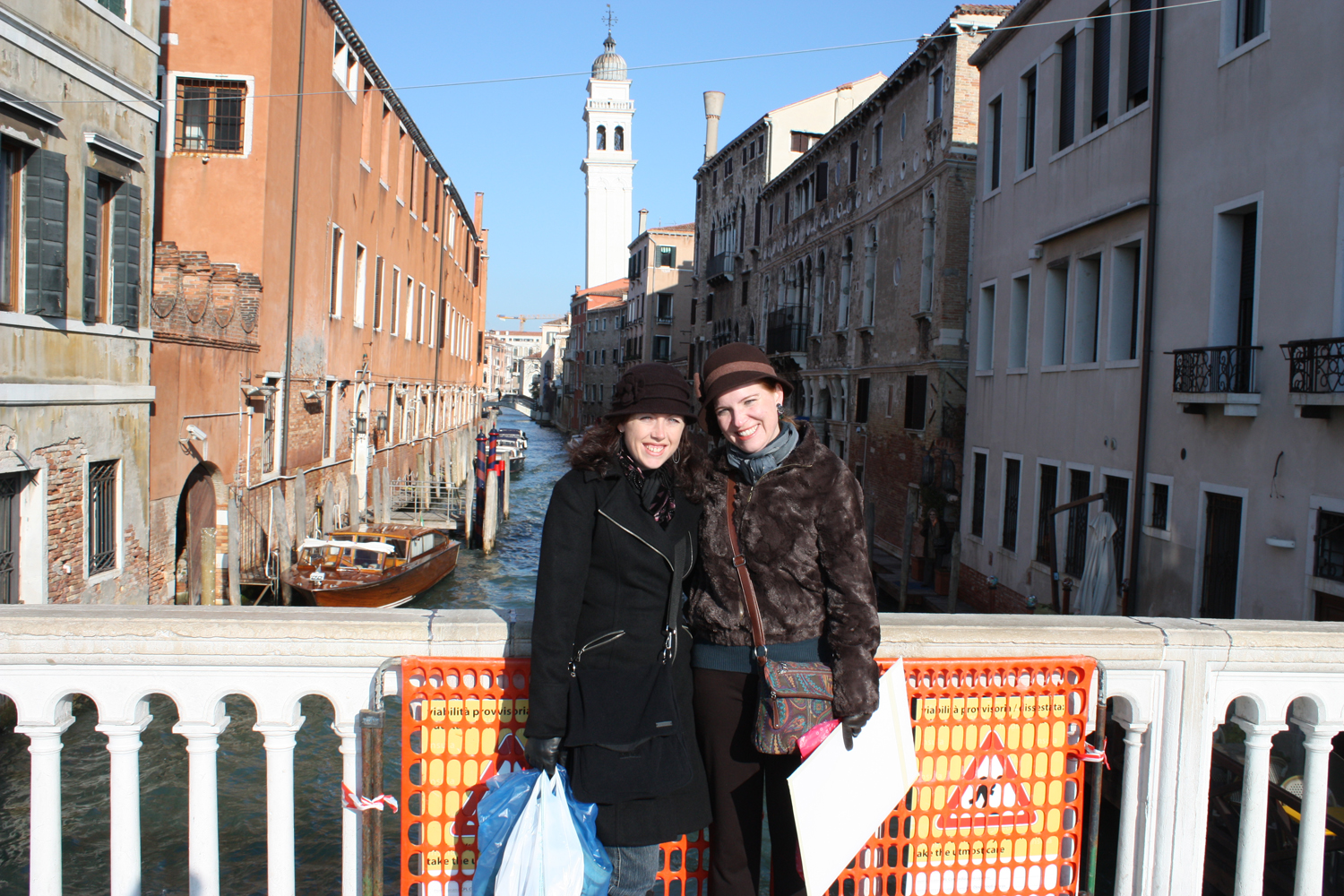
Retail therapy in Venice with Dorothy
Yet I often wonder how many of us know this, how many of us are brave enough to test the true depth of our friendships, to be who we are without fear among the people we love. It is no easy thing. We are all guilty of holding back, playing games, pretending all is well…even among those closest to us, fearful of the depth and vulnerability we might discover should we let go…and fearful, too, of finding nothing, no depth, no connection, no unconditional love.
Humans are social creatures, and abandonment is one of our greatest primal fears.
It is one reason we are so lucky to be women. It is easy for us to look at men and their easy friendships with other men, their perception of “depth” as an intense conversation about politics, and their ability to compartmentalize pain and fear and envy them. And it is so easy for us to be angry with them, too, for failing to connect with us as our women friends do.
A friend of mine said to me recently, “I cannot help being angry with my husband because he does not know me as well as my best friend does.”
This is not so much a failing in the guy. It’s a failing in expectation. He does not know how, most likely, to know that woman as her best friend does. It is outside his comfort zone to go so deep, as it is with most men. They don’t live in a world of women the way we do. They cannot count on their male friends to protect their weaknesses, honor their strengths, and be there for them no matter the errors they make. It is not the way men are socialized, and it is why they need us so much more than we need them. For most men, it is their wives who serve as their only emotional centers, the only place where they can freely be themselves.
Imagine having only one person who offers you safety. Imagine having none.
New partners in crime in Savannah
I made a new friend recently, as I often do on travels, and as we walked back to our lodgings one evening, discovering, after only a couple of days’ acquaintance that we had much in common, including a similar painful life experience, she said to me with a laugh, “Can I marry you?”
I understood the message behind the joke. Because it took me a long time to stop looking to romantic partners to provide the kind of emotional depth and support that female friends do. I will not over-generalize and say that men cannot provide it. But it is rare to find such a man. As a rule, they retreat into their caves when hurting, confused, or troubled; whereas, women sound the alarm, ask for aid, and let the wagons circle. And when those wagons lock around us in times of trouble, there is no getting through until the danger has passed, chased away by the arrows of shared and recognized grief and the awareness that, with friends, just about anything is survivable.
Last Saturday I promised my four-year-old daughter movie and pizza night if she behaved herself all day while I caught up on work in the office. I don’t know as I would go so far as to call my daughter “girly.” She hates baby dolls, loves cars, trucks, trains and LEGOs and is especially fond of getting as dirty as possible when outdoors, but she also has a fondness for all things Barbie and princess. I’m okay with Barbie, and I’m actually okay with princesses, too, as long as we’re just talking about dressing up in a fabulous gown and looking beautiful for the day.
But there is a point at which my tolerance runs a little thin. Heidi persistently asks for Disney princess or Barbie princess movies–you know the ones where the girl finds her “one true love” and lives “happily ever after.” And much though I’d like to pretend my efforts to make her strong, independent, and choosy are overriding all this falderal, I know they’re not.
I still try though and resisted Heidi’s begging for yet another Barbie princess movie last weekend and chose instead the movie Enchanted. You may have seen it. It’s a little bit of an anti-fairytale with the otherworldly princess rejecting Prince Charming in favor of an imperfect marriage to a New York divorce lawyer. It still has the flavor of happily ever after, but it’s a slightly better twisting of reality.
Heidi loved it, and she even got it when the princess fought the dragon instead of the divorce lawyer. But still, it wasn’t perfect. Because the princess fails, and both she and her lover are saved by a chipmunk. Women are still not allowed to save themselves in fairytales.
A friend of mind calls Disney princess “mind-fuck for girls.” I think that’s an apt description.
Rare is the woman, no matter how intelligent, who does not suffer to some degree from a childhood of fairytale mind-fucking. I always thought it had bypassed me. Instead of browsing through catalogs at pictures of stunning wedding gowns as a pre-adolescent girl, I was cutting out pictures of my dream house…which I did eventually build, by the way. It seemed to me, even when I was quite young, that I had a much better chance of building the perfect house than of finding the perfect man.
You can control the construction of a house. Love is something else entirely. It runs where it wants to without asking anyone’s permission in advance. And most men are not prepared to be Prince Charming. They didn’t grow up watching princess movies. So there’s an emotional disconnect between boys and girls right from the get-go. My preschooler recognizes it already. She told me in the car one day, “Boys are stupid, Mommy.” I nodded, for there was much truth in this statement. And then she continued, “Daddy is a boy, so Daddy must be stupid.”
I laughed aloud, as I often do when profundity on a grand scale comes out of Heidi’s mouth. One of my girlfriends told me Heidi is far more advanced than we ever were as girls if she already gets the idea that guys don’t get us.
Even though my parents raised me not too put too much credence in fairytales and to make my own way in the world without relying on anyone else to make it for me, they apparently did not protect me enough. Because I still grew up believing that maybe, just maybe, I would fall in love with my best friend and live happily ever after.
A Better View than the Jewelry: the Riverscape from the Ponte Vecchio in Florence, Italy
It didn’t happen. Not for lack of trying. I think, like so many women (especially young ones), I did my best to cram romantic partners into my personal visions of Prince Charming. And the poor men could not help but fail. My former husband had no idea I actually wanted to be proposed to at the lovely overlook where we first watched the sunset on Skyline Drive. I honestly don’t remember exactly anymore how he asked, it was so unmemorable. Others were worse. Like the boyfriend who foolishly told me he’d bought me a diamond just out of the blue with no indication beforehand that marriage was even on the table. I told him he better pay off his college loans and credit card debt before he dared show me the thing. Thank heaven for that caveat. We broke up long before he had his finances in order, and I was saved from what probably would have been a disastrous marriage.
So I don’t have a romantic proposal story about being carried off on a white horse into the sunset to pass onto my daughter. But then my mother didn’t have one to pass onto me either. She got her engagement ring in the mail. (My dad was in the Air Force in Texas at the time.)
And maybe these anti-fairytales are better anyway. For what pain women suffer in believing that a man will sweep them off their feet one day and love and cherish them forever after. I’m not saying it doesn’t happen, mind you. But it’s rare. In my 36 years, I’ve encountered only one such couple. They were in their 50s when I met them, working at a museum where I had a part-time job during grad school. They’d been married 30 years. Every day at the end of work, that man would come into the gift shop where his wife worked, scoop her up off her feet, and kiss her. And she would giggle like a young bride. It was amazing to watch. Everyone in that museum shop would turn to look, no matter how many times we had seen it. And we all longed to be so lucky.
Because a lot of it is luck in the end, isn’t it? Chances are Mr. Right is out there for you. But chances are he lives on the other side of the country or maybe halfway across the world. He may not even speak the same language as you. How do you find him? That man whose personality is so magnetic that you’ll forgive him a thousand times for failing to put his socks in the hamper or for failing to pick the kids up on time? (Because you know the reason you’re really mad at your husband about his sloppiness and forgetfulness is because you’re mad at him for not being Prince Charming, right?) He’s not your match, and both of you know it, so you spar over the kids’ grades, whose turn it is to do the grocery shopping, why his mother is coming over again, and what to do on the weekend that everyone will enjoy.
Most of us settle for Mr. Half-Right. Or maybe even Mr. One-Quarter-Right because we know that our chances of finding the true Mr. Right are very slim. And someone told us somewhere, likely in a fairytale, that we have to get married, have kids, and pretend to live happily ever after with our “one true love.”
I’d like to think I’m over it. Sometimes I think I am. I’m a realist at least 85 percent of the time. I know men and women often don’t speak the same language, that they have wholly different expectations, that neither gender can be expected to read the other’s mind. I know that 90 percent of the time when a man hurts me, frustrates me, makes me crazy, he really has no idea he’s doing it.
But then something will inspire me to start believing in fairytales again…or at least make me want to believe. It happened most recently last November when Dorothy and I were in Florence, Italy, walking the famous Ponte Vecchio. In case you don’t know, it’s a famous bridge spanning the Fiume Arno that is lined with shops selling gold and silver jewelry. I’ve never been much into jewelry. Once when my former spouse suggested he should update my engagement ring, get me something with a bigger diamond, I told him if he had that much money, I would be far happier with a fantastic vacation or a piece of land. (I never got the diamond, by the way, or a vacation, or a new piece of real estate.) But something about this romantic 1345 bridge in Florence, overlooking the river, with its shops of jewelry and the couples hand-in-hand walking across it gave me a little regretful thrill.
“Wouldn’t it be grand to get proposed to on this bridge?” I suddenly said to Dorothy. “And then go into one of these shops and pick out your ring?”
Dorothy, like me, is something of a cynic about love, but even she had to agree. Yes, that would indeed be fantastic. And so we stood there a moment in between all the glistening shops, looking out over the water and the city, daydreaming about something that was long gone for both of us. And I think we felt a little foolish that we even had such a girlish daydream—two business-owning women who had paid for their own trips to Italy and gone unaccompanied by husbands or lovers.
The “mind-fuck for girls,” as my friend called it, apparently outlasts education, prosperity, experience, even divorce. Which really leads me to wonder what it’s all about, why we can’t let go. Is it something like the “Hope” of Pandora’s Box? Does the idea that the “one true love” is out there somewhere keep us trudging onward in the most hopeless of circumstances, enduring the string of dates with men who are not “the one,” sifting through them all, wondering, and wondering if Prince Charming is ever going to show up? Do we really go through all of this thinking we’re going to be the rare and lucky woman who truly lands Mr. Right??
Maybe.
I know there have been times in my life when I have wanted to shout like Charlotte in Sex and the City, “I’m 35! Where is he?!”
I remember watching a friend of mine walk down the aisle a few years ago. And if anyone had been through the relationship ringer, she was it. I remembered her lamenting during her days as a single, dating woman, “I’m exhausted by it. I am exhausted by dating men, none of whom are right. I just want to give up.” But one day, years later, she walked down the aisle arm-in-arm with the man she believed to be “the one,” and the beaming smile on her face gave me hope for a moment.
Maybe this will be it, I thought. Maybe she really found him, and they’re going to be in love forever. She’ll prove it’s possible. I even told her so. “Make me believe,” I urged her.
But that’s not how it happened. Her husband is not picking her up into his arms at the end of every workday and planting an “oh, my god, I am so in love with you” kiss on her lips. The question is though: does he need to be?
And I’m afraid the answer might actually be “yes.”
But do I say that because I’ve been mind-fucked, too?
Probably.
But I do know two women who found love in their 60s…finally. And at least one of them is quite madly in love. I think of her sometimes when I start feeling hopeless. I remind myself there is always that five percent or less chance that something magical might indeed cross my path one day.
Crazier things have happened.
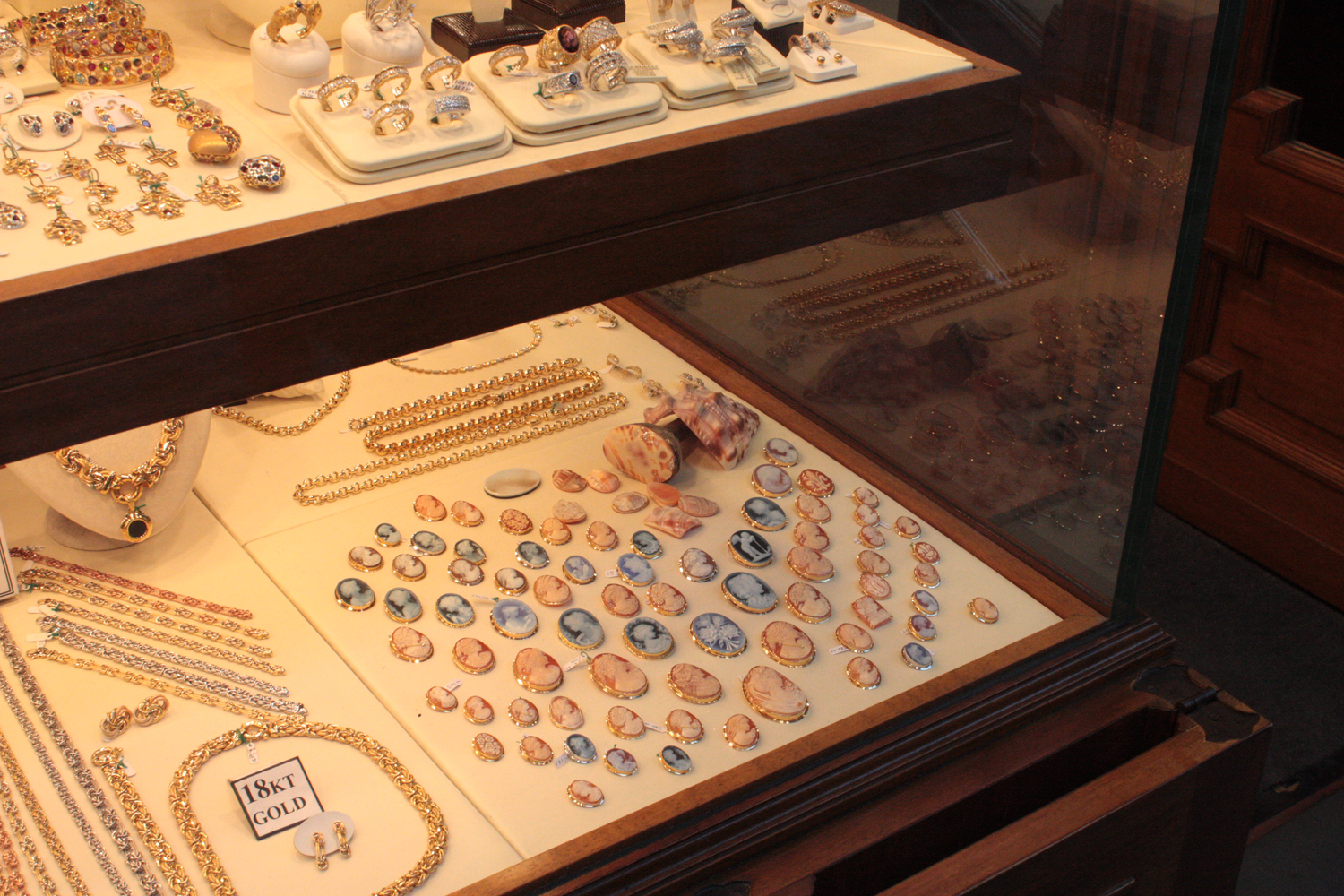
It never crossed my mind, for example, when I was the child of hard-working parents just barely getting by at times that I would one day enjoy the luxury of standing on the Ponte Vecchio looking at diamonds and coral pendants and perhaps, more importantly, looking across the centuries-old architecture of the city where Michelangelo and Leonardo da Vinci once lived.
I bought a ring for myself that day. It was not a diamond. It was not even expensive. I bought it from the jeweler on the bridge with only a few dozen pieces in his window. He told me he was able to sell the same pieces as his neighbors so much cheaper because of his low overhead. I slipped it on my finger, pulled my leather gloves back over my hands, and proceeded on my way to the Galleria degli Ufizzi to look at the original paintings of Botticelli, Raphael, and El Greco, something I also would never have imagined being able to do on a typical writer’s salary.
It did not occur to me until later that I had done my best to live out my fairytale thus far. And perhaps that simple gold filigree band was something of a self-engagement ring for me, not on the scale of the famous right-hand diamond. My fairytale is not quite that big, not yet. And I suspect if it ever gets that big, I’ll be buying more land with mountain vistas or maybe checking out Antarctica, not frittering money away on diamonds. Who knows? That is the beauty of it, too. The not knowing what’s around the next bend.
In the tale of Pandora’s box, humanity is saved by hope. But hope is not sitting on a windowsill wishing for Prince Charming to come dashing around the corner. Hope is active. It is work. It is believing…and doing…and being…even when the evidence suggests that the game will not end as you would like. It’s still worth a bold attempt. Don’t leave it to princes and chipmunks to save you. That’s great if one comes along and gives you a lift. But try lifting yourself first.
Posted by Deborah Huso on Feb 19, 2012 in Girlfriends
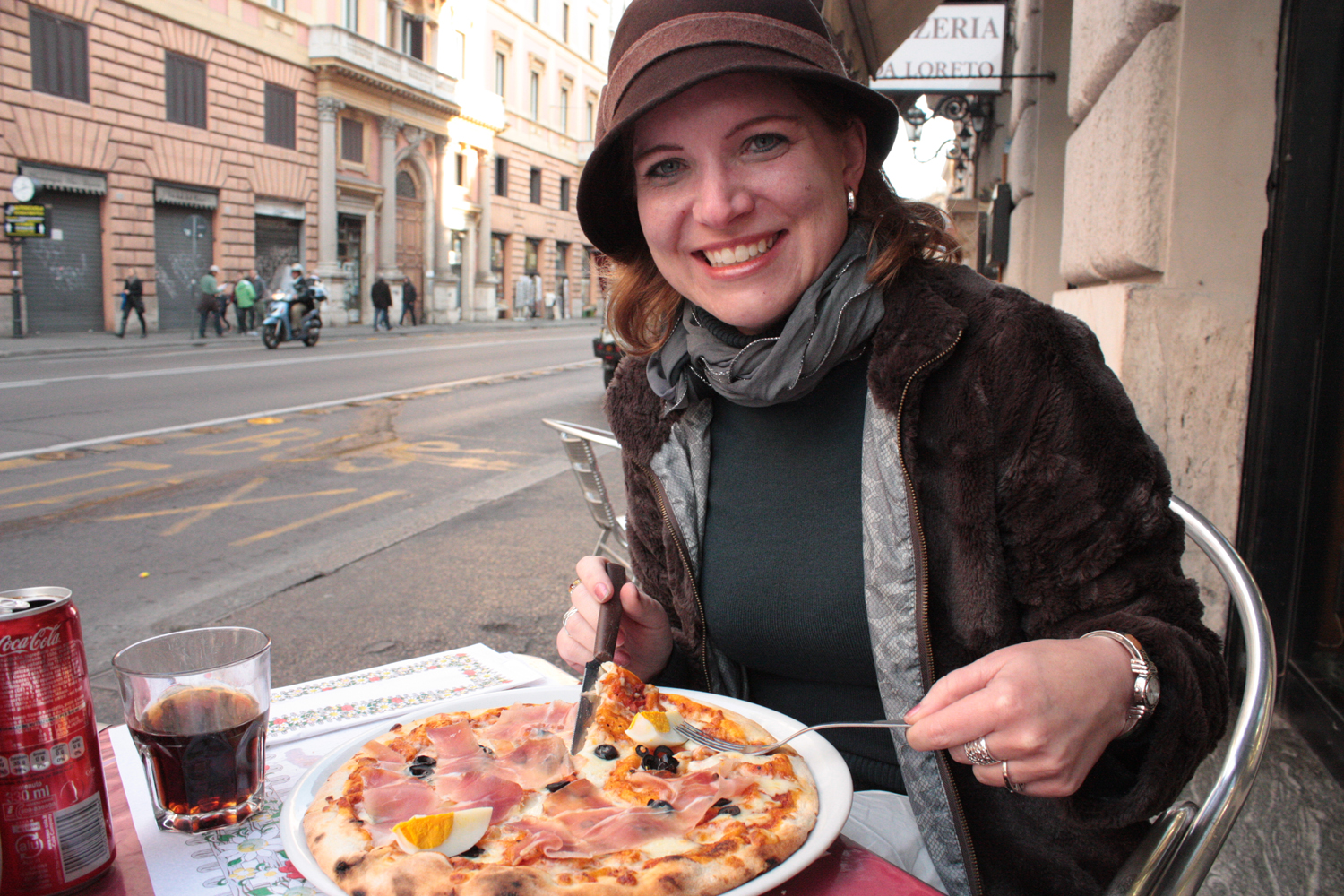
When in Rome, do as the Romans do: Eat pizza...and walk everywhere.
Thanks to all the hoopla surrounding the rising rate of obesity in America and First Lady Michelle Obama’s promise to make us all a little more fit, the media has, of late, been placing a good deal more emphasis on the concept of “emotional eating.” It’s part of our cultural jargon now. Though, truth be told, it’s always been part of my jargon and the jargon of a lot of people I know, women, in particular.
When we’re feeling emotionally cruddy, we have a tendency to do one of two things: eat or buy shoes. I don’t really know where this response comes from. I can trace it back at least to college, where Susannah and I often found ourselves showering ice cream in chocolate sprinkles at the Gettysburg Dairy Queen following boyfriend break-ups and the other traumas of young adulthood. Something about sugar seemed to make it all better, at least so long as we kept eating it.
And how do women typically stage “interventions” when one of their number is in crisis? That’s right. We bring food or take the victim to the food with a dinner on the town. Almost anything with a high caloric content will work—soft doughy pretzels made by the Mennonites and drenched in hot cheese, oozing turkey and cheese croissants pelted with crab dip, decadent raspberry chocolate cheesecake. You name the problem, we’ve got the carb-loaded drug to treat it.
Susannah visits the Cupcake Bus in Nashville: Two Cupakes, Two Bucks
The problem is after we’ve visited the “Cupcake Bus” in Nashville or the “Chocolate Lounge” in Asheville, the thing that has caused the crisis is still there in addition to a couple of extra inches around our waistlines. Then the food guilt kicks in. You have one of two options for curing that: eat until you feel good (kind of like drinking until she looks pretty) or starve yourself for three weeks to regain the figure you somehow lost in one sitting at the really delicious bistro by the train station.
I realize I’m covering sensitive territory here. When I once joked to a friend about her obsession with chocolate (and honestly, what woman with hormones does not have an obsession with chocolate?), she chided me for being a bit too open about “her problem.” The problem isn’t so much the chocolate obsession…or even the two extra inches around the waistline that the chocolate obsession leads to.
The problem is all in our heads. (Yes, men, if you are reading this, I really did say that: “it’s all in our heads.”)
Does anyone else take pictures of their food when on vacation? How to eat bread in Kotor...
It’s the food-guilt cycle that’s the problem: have crisis (sometimes about how overweight we are), eat to make it all feel better, then feel guilty for the emotional eating, go back into self-loathing over the crisis or the love handles we’re sure we will develop by the following morning. In severe cases, women develop potentially fatal eating disorders because of this cycle.
What’s going on here?
I’ll tell you: Jillian Michaels is going on here. Jackie Warner is going on here. And countless other hot bods we see on the cover of everything from Women’s Health to Ladies’ Home Journal. And let’s not even get into the Victoria’s Secret catalog that comes in the mail every week. (Why I have no idea because heaven knows, there’s nothing in there that would look good on a woman who thinks it’s perfectly acceptable to eat pizza to cure stress.)
But as women, we are inundated daily with what we are supposed to look like, and rarely do our bodies fit the bill. We chastise our thin and lovely friends who claim to have pot bellies underneath their clothes, but are somehow incapable of seeing our own hypocrisy. It does not matter what our bodies look like; they are never good enough…at least not to us. Small-chested friends of mine bemoan their lack of curves. I bemoan having too many, longing to look like the lithe and thin models I see photographed on Paris runways. Either that or wishing to myself that the cultural norm of today was that of the voluptuous movie stars of the 1950s—where breasts and hips and curving thighs were perfectly acceptable assets.
You may be smiling now, Dorothy, but you know that frozen cocktail is going straight to your hips, right?
Nothing made it all hit home like a weekend shopping trip with my dance instructor, Dorothy, to buy new costumes for the upcoming performance season. She is thin as a rail (though, being a self-critical female, she denies it up and down). I came along, I think, as the representative of the more curvaceous members of the dance team. And it didn’t take too many outfit “try-ons” before I felt almost as down in the dumps as I do after the yearly quest to update my bathing suit. I think the last number I tried on was a glitzy lavender and silver piece with sequins that accentuated my curves a little too much. Dorothy remarked on the prominence of my “upper half.” I looked in the mirror and decided my curves made me look fat, definitely not lovely or desirable. Yep, I was done and left in no small befuddlement over the weird irony that Dorothy found herself pleased with anything that gave what she claims is the “illusion” of curves, while I was enamored with anything that de-emphasized hips, breasts, and thighs.
We were like two teenagers, one with straight hair, the other with curly, each desiring the perceived better assets of what we ourselves did not possess. The women in my dance class tend to divide themselves into two self-conscious camps: the “haves” and the “have- nots.” The “haves” are constantly complaining over their womanly figures; the “have- nots” crack self-deprecating jokes about how they “ain’t got nothing.”
Nobody in the room is happy. And, I daresay, this phenomenon is all too “normal,” insofar as hating one’s body is normal in our culture.
Curing the blues with a Mexican fried donut in San Antonio: note the powdered sugar, oozing caramel, and dripping chocolate sauce
Dorothy and I treated our onslaught of poor body image induced depression by eating, of course, even though it would have been healthier, if not cheaper, to buy shoes. I drowned my sorrows in a Dr. Pepper and a bag of Cadbury mini-eggs. She chose a box of donut holes to assuage the pain (though she admitted that the purchase that day of a pair of pants she could actually fit into was making her feel a bit better).
Then we both vowed to start near starvation diets on Sunday and exercise three hours every day. It’s not that we don’t see the absurdity of our psychology here. We see it. We hate Jillian Michaels, not just because she’s a bitch, but because she makes us feel less than adequate. Nevermind that since our careers don’t involve pumping iron 12 hours a day at the gym, it’s really not possible for us to look like that anyway. Logic left this equation with the consumption of the turkey, havarti, bacon, and tomato sandwich on foccacia at lunchtime (and it tasted really good, by the way—food orgasm of the highest degree).
But was it worth it? Was it worth the self-loathing that would follow to eat that decadent sandwich?
Hard call. There is one woman in our dance class who says she has been advised that the way to eliminate her pot belly is to give up potato chips, pizza, and wine. She claimed, not without empathy and understanding from the rest of us, that life really wouldn’t be worth living if she had to give up those things.
Food is pleasurable after all, firing off the same areas of the brain that good sex and exercise do. So one could logically conclude perhaps that we should treat crises with more sex and exercise and less food and shoes. (And did I mention my closet is overflowing with shoes? I think great shoes also fire the pleasure centers of the brain.)
But how often do you see a woman trying to comfort a friend who has just broken up with the love her life by saying, “Hey, how about we go for a hike?” I remember once Susannah and I tried it. She offered up a hike at Great Falls instead of shoe shopping and eating. But somehow the shoes and the great chicken Caesar salads at Panera Bread seemed to call us harder.
Gelato in Venice: I'm in heaven...at least as long as my pants still button in the morning....
I wonder how we get this way. My mother-in-law claims it’s Barbie dolls that inspire all our body image issues. I think she’s off the scent though. My four-year-old daughter loves Barbies, and she has the best body image of any female I know. She loves to admire herself in the mirror, has no qualms about running through the house stark naked, and frequently says to herself, “Don’t I look pretty?” Then she’ll pick up a Barbie doll, pull out a fantastic evening gown for her, and hand the doll to me with the request: “Will you dress her, Mommy? I want her to look pretty like I do”
Wow. Really?
When was the last time I felt sorry for a Victoria’s Secret model and wished she could be as pretty as I am? Yeah…never.
So I’m guessing we, as humans, have some natural inclination to like ourselves, including the way we look. And then somewhere around school age begins the slow process of inspired self-loathing. My daughter tells me the boys at school make fun of her unruly curly hair. I asked her how she responds to this. “I take the ‘monster’ clip with the teeth on it out of my hair and pinch them with it,” she says matter-of-factly. I can’t really argue with this solution, so I say nothing.
I begin to think she is onto something, that maybe the next time I find myself criticizing my body, I should treat my psyche like my daughter does the mean boys on the school bus and snap myself on the wrist with a rubber band or something.
Easier said than done, of course.
But whose standard are we trying to live up to anyway? It’s certainly not that of our husbands and lovers, most of whom are just happy we’re willing to get naked with them occasionally and couldn’t care less about our love handles, if they even notice them. And competitive though women tend to be with one another, we certainly don’t dump our female friends because they’re carrying around a few extra pounds. So why do we ourselves believe we are unlovable unless we are perfect when we have so much evidence to the contrary? Is it just because an air-brushed model seems to stare at us with condemnation from her place in the magazine rack in the grocery store checkout line?
We have to be careful of this condemnation of strangers, valuing too much the opinion of a culture that asks us to starve ourselves for happiness.
Dorothy said she was feeling particularly bad about herself when she noticed her dance partner was worn out from doing lifts in a song recently. She suspected it was because she’d put on a few pounds and said to him, “I need to lose some weight, don’t I?”
Gallantly, he replied, “No, no, I just need to do more push-ups.”
This response is not so different from that of my daughter as she watches me curl my hair and put on lipstick in the morning. “Mommy, you look beautiful,” she says with beaming admiration. “Like a Cover Girl.”
And I smile a little, thinking she is full of childish misperception of what beauty is. But then she has always been hopelessly honest, too, a trait she learned from me. “Don’t wear that jacket, Mommy. It is ugly,” she has said of my choice in wardrobe. And then sometimes, “Those shoes are great, Mommy. Buy those.” And I do. Trusting somehow her gut reaction to aesthetics.
It is not unlike the reaction of a man to his wife. He finds her beautiful, not because she looks like a Victoria’s Secret model, but because she loves him, admires him, and is willing to share that most secret part of herself with him—that vulnerable body she is scared to love.
“That is what entrepreneurs do: they pair imagination with action and move boldly and often joyfully in the direction of a vision only they can see.” –Meg Cadoux Hirshberg
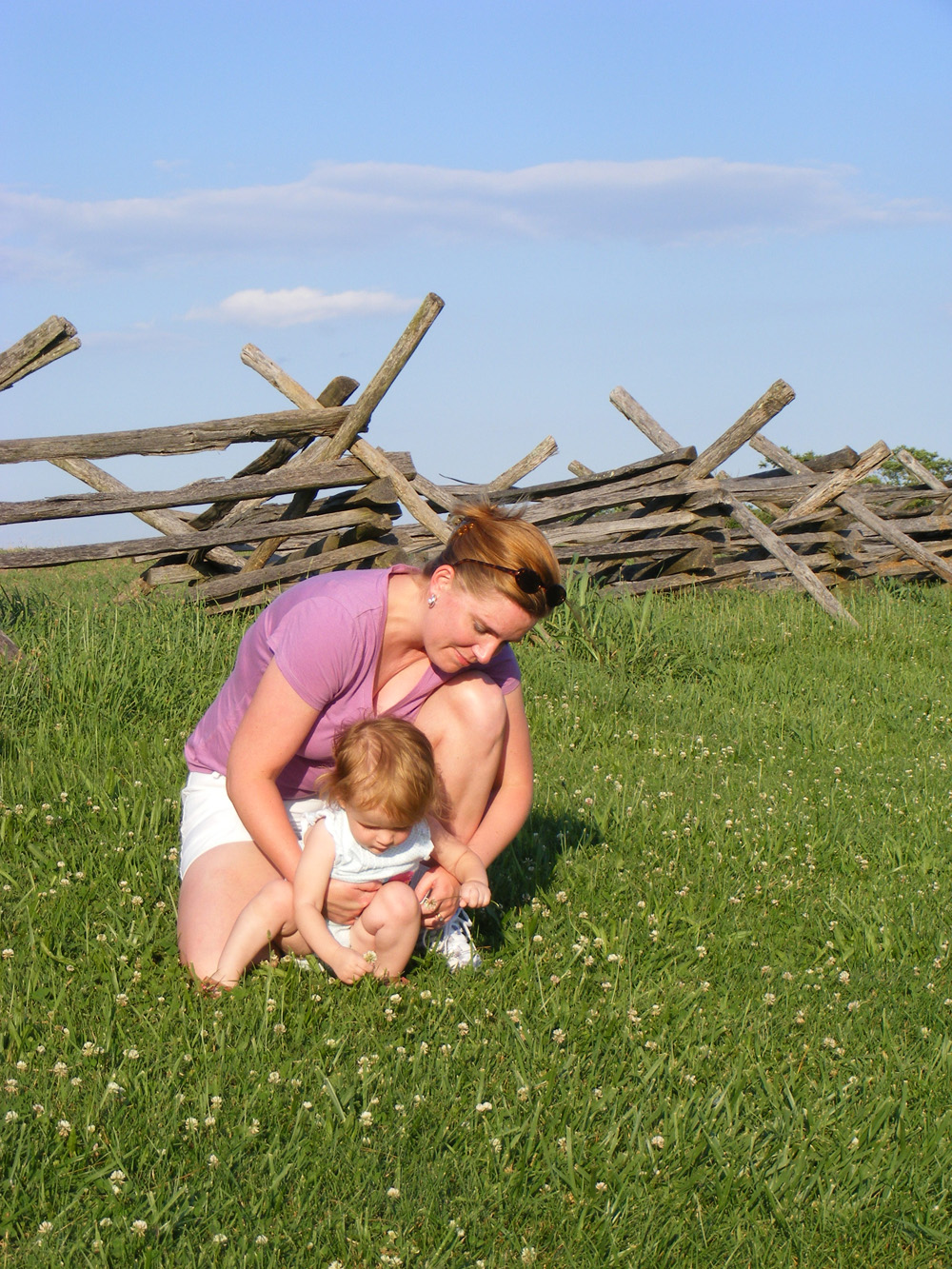
Heidi, age 1 1/2, growing up in the home office
When one of my editors at SUCCESS magazine asked me to review Meg Cadoux Hirshberg’s new book, For Better or For Work: A Survival Guide for Entrepreneurs and Their Families, I really had no idea what I was getting into. I’ve read some life-changing books as a result of my work as a reviewer, but this one wasn’t so much life-changing as life-enlightening. I literally spent the first 20 pages or so weeping.
In case you only know Hirshberg as a columnist for Inc. Magazine, let me enlighten you. She is also the wife of Stonyfield Farm yogurt founder Gary Hirshberg, the man who singlehandedly swept Meg and their three children through almost a decade of chaos because of his pursuit of a dream—to bring organic yogurt to the world. (Yes, they’re still married.)
What got me weeping over Hirshberg’s book was how hard it hit home, as in hit me right in the gut with all the not so polite things I’ve done to the people I was supposed to love while building a career as a writer. Granted, I’m no Gary Hirshberg and never will be. I have only one employee and a handful of sometime freelance designers and writers who work when I need them (or when I can afford them). But the smallness of my entrepreneurial ventures belies the brutality of my pursuit of them.
I came by my workaholism honestly enough. It’s in the family bloodline. Both of my grandfathers were entrepreneurs, as were their fathers before them. My dad and my uncle were small business owners, too. And none of us have ever stood authority well. It’s just plain safer for us to be self-employed. So I don’t think it was really any great surprise to anyone (regardless of how crazy they thought I was) when I decided to dump life in the corporate world to pursue a career as a freelance writer. And, at the time, I was young and single. There’s really nothing wrong with being a workaholic in those circumstances because the only person you’re going to hurt is yourself.
But in walked my husband-to-be about two years into this grand venture of mine. You would have thought, when he asked me to marry him, and I replied matter-of-factly, “Okay, but realize my work will always come first,” that he would have taken a quick hike for the hills. Why he didn’t I’ll never know. I can only guess that he perhaps did not believe me.
"On assignment" with Mommy at Antietam National Battlefield
All was well the first few years. He was in the military, was overseas through much of the early years of our marriage, and I continued on with my work and my life, almost as if I was still single. I worked 80-hour weeks, stayed up till the wee hours of the morning, fielded phone calls from West Coast and overseas clients, publicists, and reporters at all hours of the night. I lived and breathed my work. It was like a drug to me. I admit it: I inhaled. And as my income doubled year after year after year, the addiction grew ever stronger. But it really wasn’t the money, as many an entrepreneur will tell you. It was the adrenaline rush of getting up every day to do something I truly loved doing and being able to pay the bills doing it.
Work-life balance was not something I worried about. And it didn’t even really occur to me that I needed any such balance until I became pregnant five years ago. That was the beginning of the wake-up call. I started to feel I might have a bit of a problem on my hands when doing phone conferences with mock enthusiasm while trying to stem my nausea by sucking on ginger candy and drinking peppermint tea. Then a month-long bout of bronchitis hit. But still I plowed through, grateful for that first pregnancy advantage of not really showing, at least not until I hit eight months. I told no one, fearful clients and publishers would drop me if they knew I was expecting, figuring I would be one of those mothers who gave up her career after childbirth.
At six months, I installed fence line on my farm alone in the heat of summer, shoveled gravel on a flood torn driveway, kept hiking and practicing yoga up until (I kid you not) the very day I went into labor. And yes, I took off early that day, at 4 p.m., because I felt a little funny. Once I realized I was having contractions, ever the perfectionist, I got in the shower, shaved my legs while timing the contractions with a stopwatch, and had my husband (who had scheduled a brief leave around my due date) drive me to the hospital at the close of the workday. I was in labor for 31 hours, and 72 hours later was back at my desk again, trying to schedule interviews around my newborn daughter’s nursing schedule.
The perks of being the travel writer's daughter: luxury hotel living
Within three months, despite the foresight I had exercised in hiring an assistant, I was half crazy from trying to do it all without missing a beat. My husband was overseas, my business was running at tilt neck speed, and I was discovering that, despite the admonitions from the home nurse who came to visit after Heidi was born, that spending 12 hours a day breastfeeding as a self-employed mother on deadline was just not feasible.
“You realize if you keep this up, you are going to kill yourself,” my doula told me about two months after Heidi’s birth.
Yep, I realized it. The workaholic was going to have to give some ground.
My retreat from super woman to the woman who admitted that having it all was slightly impossible began with hiring a babysitter, giving up breastfeeding, and asking for help, including a desperate phone call to a neighbor late one night after having been awake three days straight with my daughter who was suffering from the diaper rash case from hell. That was the night I briefly and seriously considered leaving my daughter in a basket on someone’s doorstep and driving my car into a tree. Sleep deprivation does that to a person. My neighbor arrived in 10 minutes with a steaming hot supper of lamb, rice, and homemade muffins, rocked my little one to sleep, and told me I could go take a shower. A shower! A shower without setting Heidi outside the glass shower door in her bouncy seat so I could watch her all the while. A real, self-indulgent steaming hot shower!
So this was motherhood….
I was overworked and under-prepared. And I thought relief would come when my husband retired from the military eight months after our daughter was born. And it did to some degree. Finally there was someone with whom to share the late night feedings, someone who could take morning duty and let me sleep in once in awhile. And it worked…for awhile.
Hiking through Milam Gap with contributing outdoors editor "Mommy"
But you see, my husband had forgotten that pre-marriage admonition that work comes first, and like Meg Hirshberg and countless other entrepreneurs’ spouses, he began to feel like the stepchild to some half-mad person’s crazy dream. He didn’t understand why, when he would come into my office, I would shoo him away with a wave of my hand while on the phone, act disgruntled when he interrupted my train of thought while writing an article, or fail to fully appreciate the lunch he brought me in the middle of the day because he had learned I would just keep working and forget all the body’s basic needs in the process. I was aggravated that he expected me to stop and chat with him when I passed through the kitchen on the way from the office to the bathroom. I had two minutes before my next phone call after all. For him, however, it was rejection on a grand scale. It never occurred to him that he enjoyed this access to me only because my office was connected to my home. I resented the fact that he took advantage of the access, threatened many times to rent office space in town to get away from all the interruptions.
When the ever evolving media world began to demand my time 24-7, and I realized I was going to have to do a better job of being on call at night, on vacation, everywhere, I broke down and bought a Blackberry. Now everyone could reach me by phone and e-mail all the time. I’d never miss an assignment or contract opportunity again. It also meant that while my husband and daughter played in the waves on the beach, I was answering e-mails. I was relatively okay with this. I was, after all, sitting on a nearly vacant beach with the sun going down behind me, my toes pressed into wet sand. But my spouse didn’t quite see it that way. Every time my phone went off (and it went off pretty much constantly), he would grumble. I tried to soothe him by saying, “it’s the sound of money, dear, remember that.”
He threatened to heave my smartphone out the car window. Meanwhile, I saw the Blackberry, among other things, as an investment not just in my business but in my family’s future—pay off the mortgage, send Heidi to college, take fantastic family vacations, enjoy a superb retirement.
Like the Hirshbergs, we were misinterpreting each other left and right. I felt my space as a businessperson was being disrespected. He thought his role as caregiver to two thankless females was being taken for granted.
No one was going to win this battle because, in the end, both of us were wrong.
But I was wrong first, and I knew it. Because the reality is if you put work before everything else, including your own sanity, you will, eventually, crash and burn, and you might even take a few onlookers with you.
I realized I needed an intervention. And it started with closing my office door, even though it was right there next to the kitchen, at 5 p.m. Sometimes I could hear the phone ringing, but I learned to ignore it (with a few relapses involving me tiptoeing into the office to check my voicemail “just in case”). I programmed my Blackberry so that my most crucial editors and clients had their own individual ring tones, as did my closest friends. Unless I heard those ring tones, if I was on vacation, playing with my daughter, sitting in a whirlpool bath, I ignored the persistent “bling, bling, bling.” Sometimes I even dared to turn the sound off completely.
A moment of silliness at Dukes Creek Falls while on assignment for Disney's FamilyFun
Then I began taking dance classes, taking on cardio combined with camaraderie. In the last four years, the women I have met in those classes have become like a second family to me, as have their daughters to my daughter. Twice a week, I pummel my stress with intense dancing and laughter, and I do not pick up my phone. In fact, I cannot even hear it in the midst of the music and tom foolery.
I’ve still not learned to turn off the phone when on vacation. I don’t really feel I can. As a writer, my business is me. But I check it less. I sometimes even turn it off completely at night or at least put it on “silent.” I keep it tucked away in my purse when out with friends, generally cut if off completely between 5:30 and 7:30 each weeknight, the two hours I try to devote to Heidi with attention undivided.
But I am not cured, by any means.
I realize that having arrived as a writer has won me some space from my business. Most of my editors will wait for me. They will not give up and hand assignments to someone else just because I don’t answer their e-mails in two minutes. I am close enough to the best of them that they respect my time when I say I’m going on vacation and do not bother me. Some even admonish me when they see me responding to work e-mails on weekends. And because I’m not engaged so much in business building these days as business maintaining, it’s not a tragedy if I do indeed miss some project because my phone was turned off.
I don’t know as my husband ever really understood the Siren Song that lured me (and continues to lure me) to work sometimes ridiculous hours and to travel as often as twice a month to places ranging from the wilds of Alaska to the islands of the Pacific. He learned, after a time, to accept it all, perhaps gave into the role of second or third best. My daughter, on the other hand, has grown up in the throes of the business, understands, even at age four, many of the strange complexities of her mother’s life. “When I am big, will you take me on adventures with you?” she asks. “When do we get to go on an airplane together again?” For her, my world is one of excitement. And she longs to join in on the fun.
This is not to say, however, the road with her has not been rocky. Through a strange twist of circumstance, my business was at its most demanding level in the years surrounding her birth. She was three years old before I felt I had bonded with her. And sometimes she still cries when I work on Saturdays, out of necessity to meet Monday morning news deadlines, and leave her to play with her LEGOs and Thomas the Train alone. But on some level, because she has grown up with it, she gets its.
As I hurry to prepare for a morning meeting, she stands like a soldier next to the shower, my skirt in hand, ready to hand it over once I’ve pulled on my pantyhose. My phone goes off, and she grabs it, rushes it to me like a trained personal assistant, watches as I scroll through e-mails, then takes it back, and scrolls through them herself.
Have I brought her into some ill landscape where deadlines reign supreme? Perhaps. Only time will tell. But on some level, she knows, since she was born into the world of the entrepreneur, that life and work, for me, conjoin and separate like waves pressing the beach. It’s all jumbled together at times. And that is, in the end, what makes my world so incredibly lovely—that my work and my life are one. I do not watch the clock, live for Fridays at 5 p.m., or dread Monday mornings like an Egyptian plague. No, I catch the wake of a ship with my kayak and ride it as the sun settles, being at one and the same time at work and at play. I will write about this afternoon on Lake Superior with a storm drifting in, but I will also remember it as a moment of living—living my life and living my dream…and teaching my daughter, by example, the art of working, not for money, but for love.
I have a life now, separate from work. But it took me many years to get it. And I often wonder, as I lie awake at night thinking about the week’s deadlines, if I’d have it had I not finally figured out how to fit 80 hours of work into 25 or 30. Am I really cured after all? Or has success just dampened my thirst?
It is, perhaps, hard to say, but I do know that if work demanded of me now what it demanded of me years ago–to give up (or at least set aside for a time) the people I loved most in the world, the leisure time I had envisioned all this work earning me to begin with, or the freedom to live my life on my own terms–I’d be a damn sight less inclined to take it on. Because while I do indeed work for love, I also work for a living. And right now, I’m pretty darn busy living.
Reprinted from the Dec. 2010 issue of The ASJA Monthly.
When I first moved to the small mountain community where I currently reside, my neighbors were exceedingly curious about my source of income. Young and single at the time, as far as they could tell, I stayed home all day, never went to work, yet somehow continued to pay the mortgage. Finally, at a Ruritan Club meeting, a local teacher gathered enough gumption to ask me the question we freelance writers often dread: “So what do you do for a living?”
“I’m a writer,” I replied.
She smiled, “Yes, but what do you do for a living?”
I have often wondered if that general notion that one cannot seriously be a writer is not an unconscious force behind the troubles freelancers frequently have with getting paid, particularly with getting paid on time. How many times when checks from publishers have failed to arrive promptly have I been tempted to pick up the phone, call my editor, and ask her how she would feel if her employer decided not to pay her one month? Countless times.
But after a decade of earning my bread as a writer, I’ve learned a few things about getting paid, one of which involves never losing my cool and telling that editor what I really think of her persistent “misplacement” of my invoice.
As a member of the American Society of Journalists and Authors’ grievance committee, I am all too well aware of the most common payment issues affecting freelance writers—the publications that withhold payment till “acceptance” and then draw out the process of acceptance by six months (and sometimes even years); the magazines that happily accept your assigned article and then ask you to, “oh by the way,” sign their newly developed work-for-hire contract before they can process your check; and then the ones who are in tight financial circumstances and try to get off without paying you…ever.
Whether you’re a writer or entrepreneur of any stripe, some of this probably sounds familiar.
Over my career, I’ve experienced all three scenarios and then some. The good news, however, is that I have never not been paid. Perhaps you are shaking your head in disbelief at this point. But it’s true, and the secret is actually quite simple: I’ve always acted like a businessperson. No matter how passionate you are about the work you do, whether it’s writing or custom embroidery, you can’t lose yourself in the joy of the work to the degree that you set yourself up for grief in your pocketbook.
The concept of “how to get paid on time” begins long before you submit your invoice to your editor or client. It starts with knowing the financial stability (and payment history) of a market before you sign that contract and then negotiating clear payment terms as well as kill fee clauses that won’t leave you in the lurch if things go horribly wrong. And if things do go wrong and that check hasn’t arrived within 30 days of your article or project submittal, follow up promptly, not six months later. The longer you wait to pursue payment, the less professional you look as a writer, the more likely the publication will try to take advantage of you, and the more certain they will feel you won’t pursue legal action against them.
Nine out of ten times I’ve experienced an overdue invoice, a quick reminder to my editor at the 31-day mark has done the trick. How much grief can be avoided just by running a tight ship. And if that simple action fails, prompt escalation of the matter will often work wonders. Sometimes something as simple as carbon copying my lawyer on a request for payment will turn the situation around in a week or less. How, you may ask? It’s simple: if you take yourself seriously as a businessperson, so will your editors, publishers, and clients.
I didn’t become a writer because I like doing accounting. Bookkeeping is my least favorite part of the job. But doing it well has kept me afloat when plenty of other freelancers have found themselves sinking.
A case in point: two years ago a freelance photographer with whom I worked on a project for a high profile regional magazine called me up in a state of concern. The publication was long overdue on paying both of us. For me, it was a contract dispute. The new editor of the magazine was trying to force me to sign a work-for-hire contract ipso facto and withholding payment until I’d done so. I rarely give away all the rights to my work, and I wasn’t about to start for a relatively small fee of $1,000. Knowing the magazine had planned my article for the next issue and that the press deadline was less than a month away, I chose to hold my ground, telling the editor I felt I could easily withdraw my article and sell it elsewhere. The photographer didn’t feel so lucky and when I advised him of my strategy, he said, “That’s great if you can afford to hold on like that.”
Since both of us had been due payment almost nine months earlier, I replied,
“I can’t afford not to.”
And it’s true. Too often we writers, fearful of where that next paycheck is coming from, allow ourselves to be abused for the sake of money that might come at some indefinite future point. How much better it is, however, to work for markets that value their contributors, pay them well and in timely fashion, and continue to provide more work. Why continue to give your precious efforts to a market that doesn’t honor them? It doesn’t make economic sense.
I don’t know if that freelance photographer ever got his due. I hope he did because his beautiful photography was published two months later alongside my article, and it was done without me having to sign a work-for-hire contract and within two weeks of me sending a polite but firm letter to the magazine’s publisher. Needless to say, it’s not a market with which I choose to work anymore.
I devote my time to markets that respect me as a professional and pay their bills on time. How did I find these wonderful publishers and clients? By process of elimination, of course. It’s an ongoing process, however. Stop paying me on time and treating me with the respect due to a professional who acts like a professional, and I’ll stop writing for you. Simple, yes, but it’s something we writers need to remember the next time we’re inclined to take an assignment with that major national magazine just because we want the byline…without doing our homework on the magazine’s financial health, payment history, and treatment of freelancers.
Of course, it’s also important to return the favor to the people for whom we work: meet deadline with clean and accurate copy, be courteous and professional, and do it all with relentless consistency. Do those things, and the best editors of the best paying publications will beat a path to your door…guaranteed. And they’ll remember just how much they liked you (and want to earn your continued contributions) when that bill comes, too.
That dreaded holiday is approaching again. No, not Mother’s Day, though I think Valentine’s Day has got to run a close second. Who hates Valentine’s Day more than a single girl without a date? A woman who has been married more than two years….
And here’s why. It’s not because we don’t like a bouquet of red roses, guys. They’re very pretty and all, even if they are all dead within a week, less if you decide to get the day-after-Valentine’s-Day special at Kroger (um, yeah, I’ve gotten those). There is something admittedly symbolic and decadent about that particular standby gift, if you even bother to get it, which a surprising number of long-term significant others don’t. Some of them don’t even bring chocolate. And if you aren’t smart enough to know there is some consolation for a girl in chocolate, you have no business dating or being married.
You see, we dread this holiday because we resent the fact that it’s so darn easy for the guys. Unfairly so. Order the roses from the florist and maybe add in some artisan chocolates too boot. Bam. You’re done.
Meanwhile, we’ve been sweating bullets for at least a month in advance, scouring all the “what to buy your guy for V-Day web sites,” floored in some way that a silver whiskey flask or a progressive alarm clock are considered romantic gifts…or something he’d even want. How many times does he hit the snooze button in the morning anyway? And would a progressive alarm clock change that for him? And do you really see him standing there pouring his favorite malt into the tiny hole in the top of that flask? That’s the kind of OCD stuff high maintenance women engage in…minus the flask. They’re trying to figure out how not to spill that French martini in the perfectly lovely (but top-heavy) glass they just bought for it.
But where, ladies, is the all-purpose V-Day gift for guys??? Where is our dozen red roses and a box of chocolates equivalent?
I’m fearful it doesn’t exist because, being the research-intensive journalist that I am, I’ve been doing some homework on this subject at the behest of female acquaintances. Now, I haven’t done anything quite on the scale of the Gallup poll (But who answers those surveys anyway? That’s right—little old ladies with too much time on their hands—not exactly an accurate cross-section of America), but I have been polling. And the unfortunate reality is that no two women seem to have the same answer, and most of them have about a dozen “this gift might be a good one if you can afford it” suggestions that don’t even begin to offer the ease and convenience of red roses.
The first person to whom I turned my polling was my oldest and dearest friend Sarah. I knew given the fact that she is married to a chef who has a number of high level hobbies we women don’t understand (like duck hunting and motorcycling…or something along those lines) that she would have to have some good suggestions. This woman has been through the gift giving ringer. As I recall, her husband once requested a very special duck hunting backpack, the only kind of duck hunting backpack with which he could properly engage in the sport, that cost a mere $180 bucks. (And they wonder why we have to buy our purses at TJ Maxx.)
Her top all-purpose male V-Day gift suggestion was a pair of Bose Noise Cancelling Headphones. “Men adore these damn things,” she told me, “probably because they can’t hear their wives bitching at them while they’re wearing them.” A mere $300, ladies, to enable your S.O. to do what he already does so well—ignore you.
Another female friend I posed the “all-purpose male V-Day gift” question to pursed her lips, shook her head, and then said, “Food and sex. Those are the only things I can think of.”
But that’s better perhaps than what fellow contributor Susannah offered up, which was “Do we still exchange gifts after 13 years of marriage?” She never really answered the question exactly, but I’m guessing it was likely “no” after the tirade she gave me on men and flowers.
She did provide one likely suggestion though: “How about I don’t criticize him for 24 hours?” A nice intangible gift that keeps on giving…at least for a day. It would probably outlast a box of chocolates now that I think about it.
But still, I’ve not come any closer to fulfilling my quest. Suggestions of super light kayak paddles, ATV outings, and super-duper hiking boots abound. But we all know, as we’ve all been there, that we’ll purchase the wrong thing no matter how much research we engage in. I tried for years to comprehend my former spouse’s hobbies in an effort to give the perfect gifts. I’m pretty sure I failed every time. I finally just gave up and stuck gift cards to Advance Auto and Bass Pro Shops in his Valentines. Not much thought going into that, but then exactly how much thought is going into the roses? That’s if you even get roses…or a card. I’ve gone plenty of years without either.
So maybe it is back to the old standby. No, not the Victoria’s Secret gift card for him (though it will do in a pinch). I’m talking sex. As a friend of mine said with a shrug, “Sex is easy, but it’s always well-received. I never get any complaints, and it’s the gift that gives back.”
Maybe so. Some guys will do the laundry for it. A few will even mow the grass.
And heck, don’t we have enough to worry about without having to come up with a V-Day gift he won’t return the very next day or stuff into his closet behind all those shirts you’ve given him over the years that really bring out his eyes but which he says are far too feminine? (And since when is forest green a feminine color?)
But you know, there is some small and wicked part of me that just once would like to see men go through the retail gymnastics that we do for them. How do they get off so easy? Flowers, chocolate, a nice bottle of wine, sweet smelling lotion, a pretty necklace—and we smile and tell them how much we love their thoughtfulness. Is it thoughtful? How much thought did they put into it? And maybe we are just too darn easy to please. Um yeah, you read that correctly. Women are very easy to please in the gift giving department, at least those who’ve been around the block a few times are. We’ve decreased our expectations to the point that if a guy even remembers Valentine’s Day, much less gives us flowers, we think he’s king of the hill.
I’m not the only female though that longs to see them sweat as much as we do.
After much puzzling on this whole subject of what to buy the men in our lives, Sarah finally said we needed to start demanding more ourselves, give them a taste of what it’s like to search frantically for the gift that tells them that not only do we love them but we understand them, we get them.
Do they do this for us?
And then inspiration hit Sarah like a bolt of lightning from above, as she came up with a scenario for the women blighted by too much painstaking shopping at Brooktone and Cabella’s to try in an effort to give the men in our lives a taste of what we go through for love of them:
Do you have an iPod? I think you should ask for an engraved one and ask him to make you a playlist that best reflects you and your relationship. Actually, get him to make several playlists that symbolize your time together…. Now that will get him thinking! And doing something besides buying roses or chocolate…
Although I think you should ask for Shari’s Berries, too….
It is a problem I often discuss with fellow contributor and mother Susannah Herrada—the dearth of material on this blog on motherhood. We promise to cover this subject and do occasionally, but, as Susannah says, “Men and sex are so much more fun to talk about.” I don’t know as “fun” is the appropriate word. “Intriguing” might be a more accurate word and less likely to get me in dutch with the opposing gender than other descriptors that come to mind.
Not that I don’t like men. I love them. That’s the problem.
If I wasn’t so fond of them, I could avoid a lot of grief in this life. Because it can be grief-inducing to love that which we do not understand. If you’re a woman anyway. I don’t think most men understand us either, but they don’t get very wound up about it. They just shake their heads, shrug, and go treat their confusion with an alcoholic beverage or two.
I’m not sure at what point it was in my life that men really began to confuse me. When I was a child, my dad was one of my fondest playmates, I was the only girl among a host of boys at my babysitter’s, and I loved LEGOs, Hot Wheels, and playing Soviets vs. Americans (as opposed to cowboys and Indians) with the boys. I could leap off a brick wall, crawl through a ditch in a make-believe war zone, and take prisoners in a tomato cage with the best of them. And when I hit high school, I found guys were much more interesting conversationalists than the typical adolescent girl who seemed to me far too wound up for my taste in spending the vast majority of her waking hours trying to figure out how to be attractive to the opposite sex when it seemed quite simple to me—just talk to them. Having a great rack will only get you so far. At some point you have to do something else besides look cute.
Or so I thought.
But somewhere after college and a couple of relationships that ended on sour notes for reasons I could not explain at the time and maybe after I had a baby, I started to lose my preference for men as friends. It was almost as if, overnight, they became creatures who were completely out of touch with my reality and had absolutely no understanding of what I needed or wanted.
I found instead that in order to get what I required in the form of support and understanding, I needed to go to my women friends. Because in the wake of the rush of teenage hormones and love gone wrong, the women had suddenly become smart again, and somehow the men I had so admired became a little bit stupid…at least in a few critical areas…one being human relationships.
They remain great consorts for debating whether or not the Fed is doing the right thing by keeping interest rates low or for discussing why we should care anymore about Newt Gingrich’s purported request for “open marriage” than we do about the stains on Monica Lewinsky’s blue dress. Which sort of brings me to the point of this whole discussion.
And that is, are men really the jerks they so often appear to be? Because while I really don’t give a crap who sleeps with whom or who is doing what on whose dress, the one thing that does bug me is when men lie. Not just about sex but about all kinds of things.
When I suggested to a friend recently that I felt I was being lied to by a man, she responded somewhat glibly, “I’m not really sure if you can call it lying when they don’t really know they’re lying.”
You mean Bill Clinton really didn’t believe fellatio was sex? And Newt Gingrich didn’t really realize he had no friends who could guarantee he did not make a request to his wife for open marriage?
Yep, on some level, that’s about right, ladies. Their minds are a little bit different than ours. Because as my friend went onto say, “They are lying to themselves, and they don’t really know it, so you can’t really get mad at them for lying to you.”
“Well,” I replied, still in a huff of discontent at some recent offense by a male friend, “I still think he’s a jerk.”
“No,” my friend rejoined, “he’s not a jerk, but he is a man.”
We women complain at length about this phenomenon of “being a man.” We criticize their seeming contentedness with life as long as they have access to good food, warm beds, sufficient sleep, sufficient sex, a television, a drawer full or two of electronic gadgets, and a well-stocked liquor cabinet or fridge of beer, depending on which type of man you happen to choose. But don’t we have some responsibility here? I mean, we raised them. Or our mother’s generation did anyway. And then we went and married them, and if that isn’t an acknowledgment of acceptance, I don’t know what is.
Some of us can claim ignorance because we married young, back before we really understood what men were all about. It’s like when you watch one of those reality TV shows on brides. (Forgive me for not knowing the names of these things, but I don’t have a television, so I get a glimpse of popular culture only in hotel rooms.) You’ll see the fresh and lovely 20-something bride, trying on her sequined, strapless gown, her mother arranging a veil over her delicate shoulders, and she oozes at the camera: “Jason is my best friend. Marrying him is a dream come true.”
Yes, please hold the vomit if you can.
It’s not that I’m cynical. I really do like men, especially the ones I don’t have to pick up after. But I am a realist. And I’m pretty certain if you ask any woman 35 and older if her husband is her best friend, she’ll give you a look of complete incredulity and say something like, “Are you kidding? My 13-year-old daughter is a better friend than he is.”
And that’s because not only do mothers and society as a whole not train men to have the slightest idea how to be friends (Men’s idea of consolation in a crisis goes something like this, “Aw, that really sucks, Dave, that your wife walked out on you. But hey, at least she won’t get after you about poker night anymore, huh? So, how about a round of golf? You up for it?”), their wives and girlfriends don’t give much attention to it either. After we discover that the whole intensive listening, commiseration, hugging, and kissing away of tears that we experienced in the throes of early romance was all a grand ploy to get us between the sheets permanently, maybe with a few nice hot dinners thrown in, we become bitter and, well, give up.
We think these men are dreadful creatures for wanting no more from us than that and then for giving so little in return.
I’m loathe to report this, but we do bear some responsibility here, ladies. Here’s a case in point: A male colleague of mine, after perusing this blog with some interest and not a little bit of offense, recounted to me how he was sitting in front of the TV one night watching the news while his wife folded laundry in the adjacent room. After some time had passed, she called out, “How is it that I have folded four loads of laundry, and you are just sitting there watching TV?”
Not about to take this imbedded criticism sitting down, my male colleague retorted to his wife, “As I recall, when we first married and I helped with the laundry, you constantly criticized the way I did it until I just quit.”
Is this sounding familiar to any of you?
My disgruntled male colleague continued his story. “’I told her,’ he said, ‘do you want the laundry folded, or do you want it done your way?’” And he huffed a little at me, the surrogate demanding female, and said, “Because I’m just going to wad up my underwear.”
I’m listening to him all the while and nodding a bit. I’m getting it. I really am.
He’s not finished with his tirade against women though. “My wife irons the sheets,” he persists. “Who irons their sheets?! She got that from her mother, but she’s way better than her mother. If she wasn’t, I wouldn’t have chosen her.”
And I find myself a little bit heartened by the seeming backhanded compliment he has given his beloved who does all the family’s laundry and carefully irons everyone’s bed linens. He loves her. I heard it in his voice. Nevermind that his wife has apparently not been through the ringer yet enough to do as a much more experienced friend of mine has done….
The friend to whom I am referring recently moved in with her fiancé. And to her delight and surprise, she has discovered the man vacuums. And he doesn’t just vacuum. He vacuums without being asked to vacuum. “The first time he turned on the vacuum cleaner,” she said, “my jaw dropped.”
Her jaw more than dropped actually. She said the minute he began moving that sucker across the living room floor, she said to herself, I’m gonna marry that man.
Just between us, she admitted he doesn’t vacuum the way she would vacuum, if she indeed ever vacuumed, which she hasn’t because she’s always had a housekeeper, but the woman is no dummy. She is keeping her lips carefully sealed, remembering to be thankful for the fact that “by god, the man has initiative” and who the hell cares if all he wants in return is sex and a steaming hot slice of lasagna?
Because that really is what it’s all about, isn’t it? It’s not that we’re angry at men because all they want is food and sex (or whatever other seemingly simplistic pleasure it is). We’re angry at them because they don’t acknowledge what those needs actually represent—that sex is the only way they know how to relate to us in many instances, and our provision of a hot meal is how they know (whether they admit it or not) they are loved and cared for, and they need our emotional sustenance as much, if not more, than we need theirs. (After all, their best buddy isn’t going to sit up with them all night and listen to them bemoan the loss of their mother, but we will…if they ask. They probably won’t ask, at least not the way we would ask, but pay attention the next time your S.O. comes home from the most hellacious day at work ever. And notice how it changes his mood entirely if you give him physical attention. Deny it, and you have just verified, unintentionally most likely, that his boss is right—he is an idiot.)
It’s true they have a lot of trouble speaking our language. But we are just as guilty of not speaking theirs.
This is not to say one should forgive the behavior of jerks. Some men really are jerks and probably intend to be. Like the guy I ran into on assignment not too long ago who began chatting with me at a cocktail party following a launch event. We discovered to our mutual delight we both had wicked senses of humor, and I even forgave him for leaning into me a little too hard after he’d had a few drinks, particularly since it sounded as if, from his chit-chat, he’d been recently divorced and wasn’t quite over it.
However, I was to discover a few weeks later when he “friended” me on Facebook that yes, he was divorced all right, but also recently remarried, as in remarried four months before he started coming onto me in what I thought at the time was a relatively harmless gesture of flirting from a discarded man massaging his damaged ego. No matter how I turned that one over in my head, the guy was a jerk.
But chances are actually reasonably good that the guy you’re with isn’t, at least not to the degree you think. Give him a break, and let him wad up his underwear if he wants to. And as for the guys, if you happen to be reading this, I’ll let you in on a secret a female colleague told me once: “The thing men don’t realize is that we’d forgive a lot more of their dirty socks on the floor, their muddy footprints across the porcelain tile, and the fact that they sit in front of the TV while we’re cooking dinner if they could just reignite the romance they spoiled us with before we married.”