Posted by Deborah Huso on Oct 23, 2011 in
Musings,
Success Guide The following essay was originally published in the March/April 2011 issue of Cooperative Living magazine.
Spring comes late to my home in Virginia’s Blue Grass Valley, this otherworldly place of high-elevation pastures and undulating ridgelines, with winter often extending into April. But when that last bit of snow slips down through the soil to rejoin the limestone earth and the whole valley flames fresh green from the swales of the creek beds to the tops of the sugar maples that crown Lantz and Monterey mountains, it seems no great thing to have waded through six months of winter if this rebirth is the reward.
View from the author's Blue Grass Valley farm
We humans are not so unlike the landscape that surrounds us. Like yellow jonquils and redheaded tulips that press forth through thaw-softened earth after their annual slumber, we sometimes lie dormant as winter for years until the opportunity comes for us to throw off the mantle of our former selves and transform into something akin to spring. Like the grass beneath our feet, we find ourselves changing and expanding with the seasons of our lives, often imperceptibly but occasionally with great force like the reinvented course of a mountain stream after a flood.
Last May, as Highland County was bursting into bloom, I crossed the ocean to revisit the land of my not-so-long-ago ancestors, those who had come here only a century before, to carve a life out of the black soil of the American Midwest, daring to leave life as the children of Norwegian cotters for the prospect of becoming landowner farmers in a landscape far different from the sidelong pastures of the Tresfjord where they were born with the smell of the sea always peppering the breeze.
Standing in the churchyard in western Norway where my great-great-grandfather was baptized, reading the family names across the gravestones — Naerem, Sylte, and Knutson — was to me a vivid reminder of the transformation my ancestors undertook all those years ago, hoping that by transitioning from one landscape to another, from the hardscrabble slopes of the Norwegian fjords to the thick black soil of the American prairie, they would transform their destinies.
And so they did, making a way for themselves, and for those of us who would follow, in a world without abject poverty, without the press of landlords, without the hardship of carving a living out of mountainsides more rock than soil.
When I came home again, America looked different, transformed. But it was I who had changed. I had witnessed the power of place in changing destiny. I had seen firsthand how impossible it would have been for me to be who I am or do what I have done had my great-great-grandparents not been brave enough to change their lives forever. And I began to comprehend at last what my college mentor had meant all those years ago when he talked of “the right to rise,” our American birthright.
He, too, knew the transformative power of leaving one landscape to join another, having come of age in a ghetto in Nazi-occupied Budapest as a Hungarian Jew. It was his father who enjoined him after the Communists came to power to risk a border crossing and find his way to America. And so he did, landing in New York City with $1 in his pocket. He read the speeches and writings of Abraham Lincoln to teach himself English and is today, more than half a century later, one of the world’s foremost Lincoln scholars.
I do not know, given his hopes I would become a historian, too, if he would understand my less-dramatic change of setting — why I emptied all my savings almost a decade ago to purchase a house and land in Highland County with no immediate prospect of employment, only the hope that I could do as I had long dreamed of doing, to make my way in the world as a writer in a landscape I had loved since childhood. Certainly no one else in my life understood.
But I had already learned, by that point in my life, that change, transformation, rebirth, do not come without risk, and rarely do they come without suffering. And when, at age 26, I came to Highland with the first carload of my life packed in boxes to find my driveway flooded by the snowmelt of early spring, the creek overflowing its banks, and coursing a foot or more over the dry ford, I laughed, rolled up my pants legs, and proceeded to carry my life, box by box, across that stream to my new home, the first of many challenges that would face me in the years to come.
And since that spring almost a decade ago, I have found my life transformed many times, frequently by landscapes, sometimes by people, and occasionally by pain. All the world’s major religions refer to these journeys of transformation and rebirth, how they are little removed from the journeys of the grass and trees that die back each winter to be reborn again in spring. But if you are not in tune to these cycles, as the farmer is to the character of the soil, it is easy enough to miss the opportunities they provide. It is not every seed that finds its way through the topsoil to become a walnut tree.
Did my great-great-grandfather know when he boarded that ship in Molde, Norway, that he was changing the course of history for all his progeny? Did Gabor Boritt know when he ran across the heavily guarded Hungarian border into Austria that he would one day receive the National Humanities Medal from an American President? Do any of us know when the chance comes to change where that change will lead?
We do not, of course. And sometimes we do not even recognize the chance, or we fail to embrace it out of fear, forgetting this is the natural cycle of things — change and rebirth, like the re-greening of the landscape in spring. But imagine if the snowdrops and crocuses failed to break through those last patches of snow, if the maples did not uncurl their new springtime leaves, if the pear and crabapple blossoms did not spray the hillsides in white and pink. Each year they return, a little more brilliant than the year before.
And so must we, remembering always how like brown grass and winter tree limbs we would be if we did not have the courage to embrace our own opportunities for renewal, whether those transformations come through the power of place, through love lost or gained, through pain overcome, or through the simple daring to be fully present in this — the lovely landscape of our own human lives.
Posted by Deborah Huso on Oct 22, 2011 in
Motherhood Being a writer, I travel a lot, often averaging a week away from home a month. I don’t complain about it too much though. In fact, I’ll let you in on a secret: I love it. It doesn’t matter that I’m working. Because let’s face it: while my days “on assignment” can be long and tiring, sometimes starting at 6:30 a.m. and not ending until 10 p.m. (and let’s not forget the couple of hours I then stay up catching up on e-mail at the hotel), they are not usually spent in arduous meetings watching the dullest PowerPoint presentations known to man. Instead, I will frequently spend these days away from home doing everything from sea kayaking to stand-up paddle boarding. It could be worse. It could be a lot worse.

The author, sans famille, enjoying the Sea of Cortez
And even if it were a lot worse, I still wouldn’t complain. A friend of mine who travels around the world overseeing clinical research trials says she loves hotel rooms. “When you leave them in the morning and come back in the evening, they look pretty much the way they did when you checked in,” she says. “Someone makes the bed, cleans the bathroom, leaves you cookies.”
An editor, wife, and new mother I ran into on my latest trip to Chattanooga, Tennessee, told me she, too, loves the travel that comes with the job: “I get a king bed all to myself, and I don’t wake up with any cats sleeping on my head.” An added bonus: she can drink beer at the airport.
Unfortunately, I know far too many women who have not yet discovered the art of traveling solo, whether it’s for work or pleasure. Guilt ties them to their husbands and children. They are so guilt-ridden, in fact, that they would never admit to their friends (or even to themselves) that they actually want to get the heck out of Dodge, even if only for a day or two. This is tragedy on a grand scale. And I cannot help but wonder why otherwise sane and intelligent women chain themselves to motherhood and marriage as if it’s a life sentence, no probation allowed.
Men rarely do this. How many men ask their wives if it’s okay to go out with the guys on the weekend or if it would be in bad form to go on a hunting trip to Alaska for a week? Do men feel this level of bondage? I don’t think so. Call it socialization if you will, but even the most liberated women among us still feel they are less than women if they long for a night away from their toddlers or a week away from the company of their spouses.
I’ll admit it took me awhile to discover the blessings of solo travel. I got my feet wet taking girlfriend getaways and discovered, at first to my horror, that vacationing with women friends was about ten times more fun than traveling with my husband. You don’t have to waste time looking beautiful every day because your girlfriends really don’t care as long as you’re not embarrassingly sloppy, and you can laugh as loud as you want in the restaurant because women are not as hung up on propriety as men are (yes, it’s true, ladies). Plus, your female friends won’t give you a guilt trip about going to a museum they’re not really interested in. Women share and share alike. Follow me around The Louvre, and I’ll support you in your search for the perfect stinky cheese. Men will tell you it’s okay with them if all you want to do is shop for shoes in Rome, but they don’t mean it. And they’ll give you more guilt than your mother when it’s all said and done.
But even better than the girlfriend getaway is the solo retreat. And I don’t care if it’s an actual vacation or travel for work. Few things beat sitting alone in a posh restaurant in a tropical garden in L.A. sipping California Riesling without having to carry a conversation or make someone else laugh. It’s divine, in fact, about as divine as sinking into a king-size bed in a hotel suite you have all to yourself with no 6 a.m. “I’ts morning time, Mommy!” wake-up calls.
When I travel by myself, whether it’s on my own personal vacation or on assignment for a magazine, I retreat (without even being aware of it sometimes) into a life that is mine but isn’t. All the anxiety of meeting deadlines, picking up the kid on time, being cheerful for a grumpy spouse coming home after 12 hours of work and a long commute, and suppressing my own “I just want to scream because I can’t take it anymore” tendencies so I don’t land my daughter in psychotherapy before age 12 dissipate into thin air. I forget that crazy woman who lives at home and become entirely myself–the long lost adventurer of my youth out on a journey to see the world and live in the moment with no responsibility to my name but getting out of bed and living hard and blissfully all day long.
If you tell me you don’t need this, then I have to tell you: you are lying to yourself, whether out of guilt or societal pressure, I don’t know. But you are lying. Because we all need to be apart from our families. We all need to stay in touch with the women that we were and still are beneath that stressed out surface of the world’s greatest multi-tasker.
I didn’t realize how much I needed it until returning from a trip one day and pausing across a long layover at O’Hare to have lunch and remembering for a moment that I was returning to my four-year-old’s birthday party–a potential mob of waist-high people in my house, the presence of my mother, my mother-in-law, and sundry relatives who all think I’m just a little bit too much to take. The thought of that re-entry into my everyday life made me scan the menu for hard liquor.
But, in the end, while I’ll never be the mother my mother thinks I should be, I’m a damn good one just the same. And that’s because my solo journeys strengthen my sanity and enable me to walk into my bedroom, where my daughter has just colored the ottoman on my favorite chair with an ink pen, and not turn into psycho-mommy. Instead, I glance over at the stack of Italy travel books on my nightstand, smile a little to myself about my next escape, and engage in a strangely rational conversation with my child about why we don’t do pen and ink drawings on household furniture.
So next time you find yourself putting on a “mommy show” for your 10-year-old, who seems mildly amused that you can get so upset over the fact that he just locked his sister in the closet (a treatment she may well have deserved if she was chattering on the way she is known to chatter on), consider the fact that it may be time for you to do some solo traveling of your own.
Posted by Deborah Huso on Oct 15, 2011 in
Men,
Relationships Have you ever noticed that men, generally speaking, don’t like to be questioned? And I’m not talking the “Where have you been for the past four hours?” type questions. I’m talking about any questions. Dare to ask, and you’ll get one of two answers: the “oh shit” stare or the “I’ve got it under control” answer. With my husband, it’s usually the latter. “Are you going to change the oil in my car today?” A simple “yes” or “no” answer is all that’s required, right? Not so. “I’ve got it under control,” he says. What does that mean? Does it men “yes” or “no?” Or does it mean something else entirely?
I know I’m not alone here. One of my best friends, who has been married just under two years, has already had this experience. “Men do not like being probed,” she tells me about four months after their son is born. She has contacted me to try to unravel her new husband’s frequent response of “I’ve got it under control.” She recounts to me how she walked into the kitchen one morning to find a bag of breast milk sitting on the counter while her beloved spouse was surfing on the Internet with his iPad, the baby comfortably asleep nearby. Now as any nursing mother knows, it takes a good 30 minutes to pump out four ounces of milk, and most of us are so time-strapped we’ve even been known to engage in the process while commuting to work. You would think men would be cognizant of the sacrifice. As my friend gracefully pointed out when relating this story, “If the damn milk sits out for more than two hours, it goes bad, and you know how freaking time consuming it is to pump that stuff!”
Yes, I do. Her husband, however, does not, or so we think at first.
My dear friend began to question the man: “What are you going to do with it?”
He became frustrated, told her not to worry about it, that he was “handling” it.
And my friend wondered, What the hell did that mean?
Being the direct kind of creature she is (after all, she’s a woman), she said, “What do you mean? Should I warm it up? Where are you going to put it? Do you need an ice pack?”
Of course, that line of questioning, unbeknownst to her, was going to get her nowhere. All he said was, “I’ve got it under control.”
My friend’s response to that was to take the milk pack off the counter and put it in the refrigerator.
So what does the “I’ve got it under control” answer mean anyway? Because it obviously does not mean “I’ve got it under control.” The unrefrigerated bag of breast milk is a case in point.
We must dig deeper because, as my friend noted, “Men are masters of avoiding and diverting.”
And mental sleuths though women are, we really cannot read minds. And how indeed are we supposed to figure anything out if these men don’t answer simple questions?
Never fear, ladies. I have the answers.
Because this phenomenon is not unique to husbands and boyfriends. My dad does it. Hell, my lawyer does it. But the reality is, to a man, there is no such thing as an innocent question. Unfortunately, women unwittingly ask simple things like the following, expecting simple, straightforward answers:
1) Are you going to fix the tractor today?
2) Why is the milk sitting out on the counter?
3) When are you going to remodel the basement?
4) Where would you like to go on vacation?
They seem like innocent questions, yet they can stifle the male brain for hours. Why? Well, the reality is that men, generally speaking, find questions threatening. Though women have often been blamed for “reading into things,” I would like to suggest, ladies, that the gentlemen are projecting. Never heard that term? Time to take Pscyh 101.
The trick is to share information about yourself first. It loosens them up, makes them more comfortable with the concept of talking. Or ask the question in a way that takes their opinions into account, gives them an opportunity to share expertise (i.e. instead of “why are you doing this,” ask “what do you think about doing this.”)
So, let’s try the above questions again, keeping the male brain in mind:
1) I really like the new tractor. It’s fun to drive.
2) That’s interesting that the breast milk is sitting on the counter. What do you think about breast milk sitting on the counter?
3) It will be wonderful when the basement is finished. I am dreaming about how it will look.
4) I’d like to go to Egypt on vacation. What do you think about that? What do you think our chances are of getting shot?
Just remember, under no circumstance should you ever use the word “feel” when asking a question. Never ask “How do you feel about going to my mother’s for the weekend?” or “How do you feel about our relationship?” The word “feel” gives men the willies, no matter how it’s used. You will never get any useful information out of man by asking how he feels. Trust me.
If you get the “I’ve got it under control” answer, that’s a clear indicator you’ve just achieved communication failure. Because what “I’ve got it under control” really means is “when you question me, it makes me feel like you don’t trust me and don’t believe I can handle things.” Of course, it might also mean, “I forgot to put the breast milk back in the fridge, but I’ll be damned if I’m going to admit I screwed up.”
So, ladies, remember: share yourself, and give him an opportunity to offer his expertise, and you’ll get a lot farther. He might even take out the trash for you.
Posted by Deborah Huso on Aug 18, 2011 in
Travel Archives  In addition to owning and operating a dance studio and productions company, guest blogger Dorothy Stephenson is a writer and also assists with researching and writing for Deborah Huso.
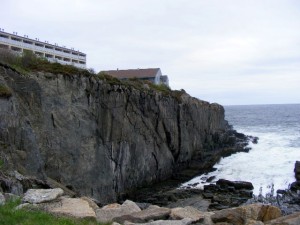
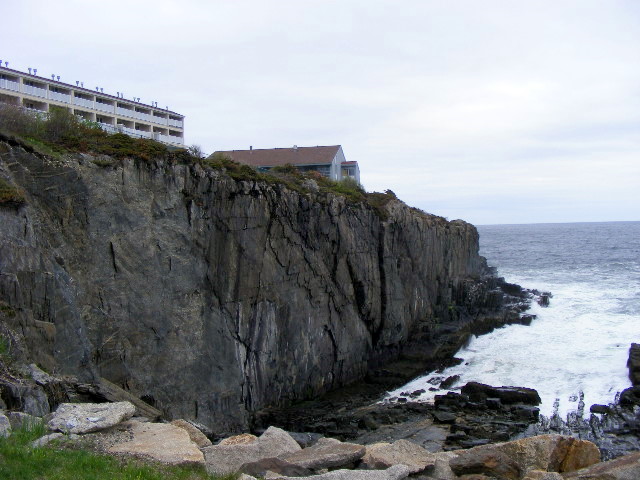
The Cliff House Resort and Spa sitting atop Bald Head Cliff
Maine is a state I always wanted to explore, so I wasted no time saying “yes” when Deborah asked if I’d like to join her on a week-long trip there in May. A 13-hour road trip from Virginia led us to the little, friendly seaside town of Ogunquit and to our new home away from home – The Cliff House Resort and Spa. I’d seen the ocean from the southeastern coast, but never like this. Ocean waves crashed against massive granite boulders with a calming, gray sky looming overhead. After snapping some pictures, grabbing a bite to eat, and squealing “We’re in Maine!!!” Deborah and I hit the sack ready to wake up the next day and experience all this charming resort town had to offer.
As it turned out, the beds were really comfortable – like sleeping on a giant cloud. So we didn’t get our adventurous, explore-everything-in-sight morning going as quickly as we planned. We eventually hit the town and stopped at Bessie’s on Shore Road for lunch. I enjoyed one of the most tender and tasteful steak salads I’d ever had. Of course, Mainers didn’t offer up sweet tea like this southern girl is used to, so I settled for Deborah’s favorite – Dr. Pepper.
After lunch, Deborah and I made our way back to our car, receiving “Hi’s” and “Hello’s” from the friendly locals, and checked out the downtown shopping scene, which consisted of toy stores, jewelry galleries, and even a chocolate shop! We headed back to the Cliff House Resort and… wait for it… SPA, where I enjoyed an 80-minute (yes, I said 80-minute) hot stone massage. I felt like I could melt off the table until… hmmm… my eyes popped open, my brows narrowed in confusion, and then I realized… “The masseuse is walking on my back.” This was definitely unlike any massage I’d experienced before, but she obviously knew her technique because I could feel the tension falling away.
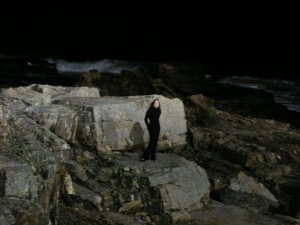
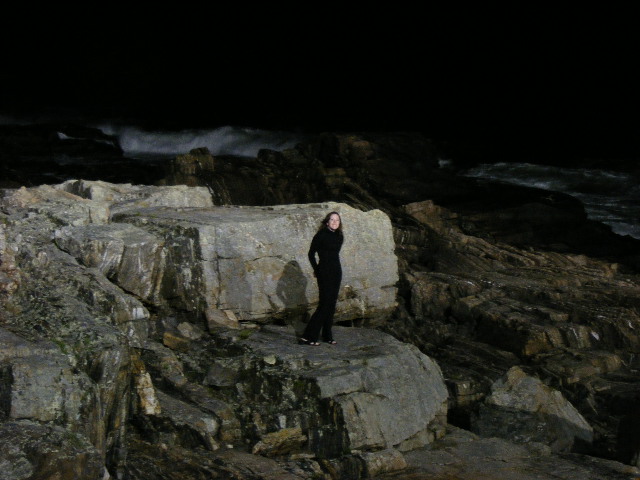
Looking Little Next to the Rocks at the Base of Bald Head Cliff
For dinner – a corner table in an oceanfront, glass-enclosed dining room offering panoramic views of the Atlantic. My eyes shut and my shoulders sank as I tasted the first bite of my lobster bisque, followed by filet mignon, and then a decadent peanut butter and chocolate chip pie for dessert. With full tummies, Deborah and I faced a bit of high winds to stroll down the outside stairways that led to a closer look of the ocean and boulder strewn beachfront. What a great trip! And, at that point, it had only just begun.
Posted by Deborah Huso on Aug 5, 2011 in
Travel Archives  My new book, Moon Spotlight Great Smoky Mountains National Park (Avalon Travel, 2011), is now available for purchase. This 90-page compact guide covers the Newfound Gap Road, Cades Cove, Clingmans Dome, and Alum Cave Bluffs Trail. In addition, it offers my recommendations on sights, entertainment, shopping, recreations, food, and transportation. The book also includes maps with sightseeing highlights to help you plan your trip.
If you’d like to order a copy, you can do so through the Avalon Travel website.
Posted by Deborah Huso on Jul 5, 2011 in
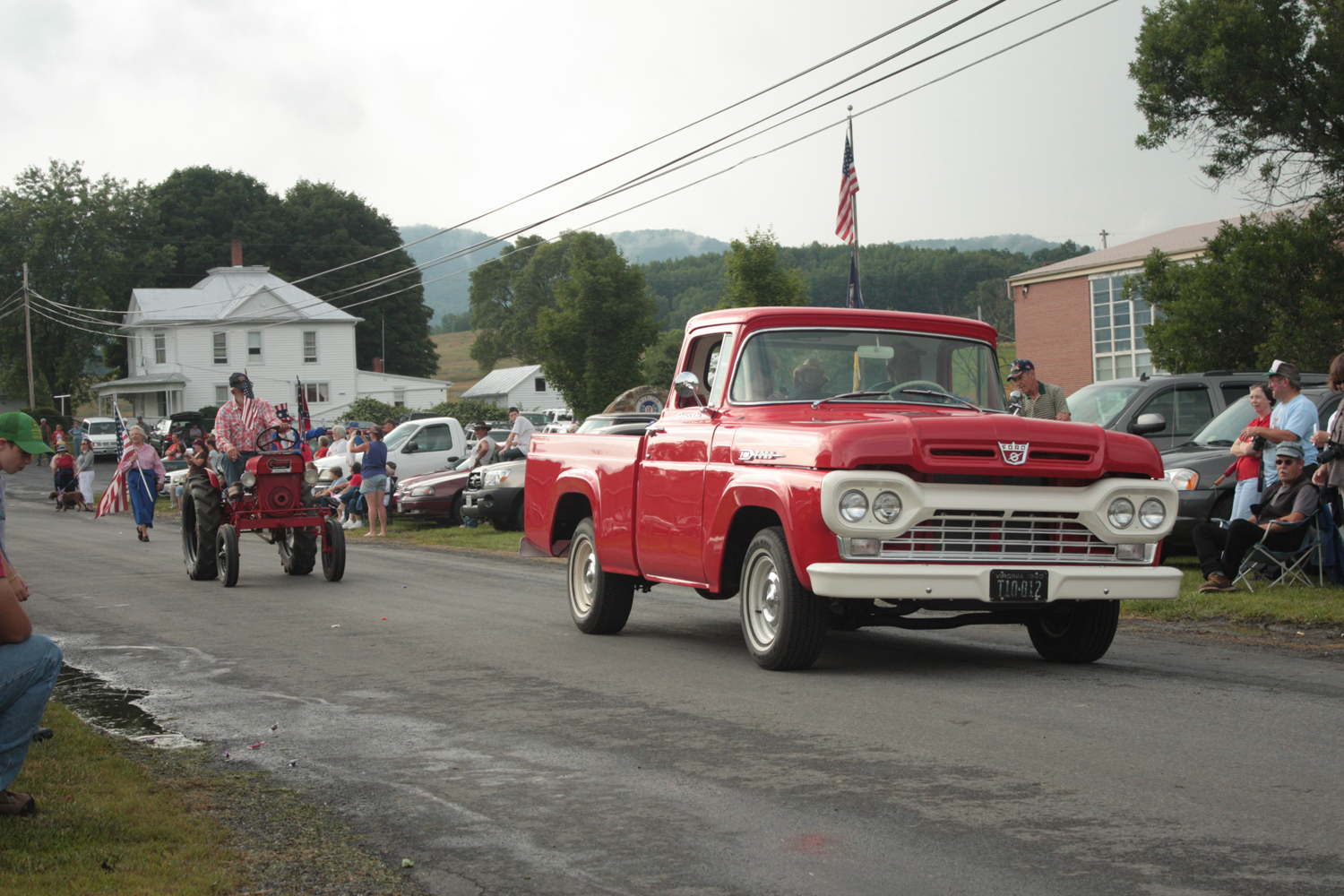
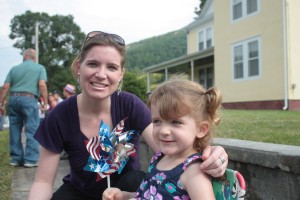
Travel Archives We all have our Independence Day traditions. Blue Grass in Virginia’s highest elevation, lowest population county is no exception. The annual 4th of July parade takes all comers. No registration required.
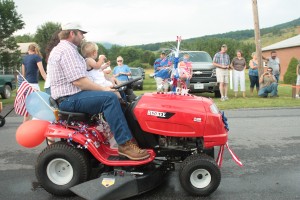
Here's your chance to show off that new hydrostatic mower

Get Fido in on the fun. All it takes is a patriotic bandana.
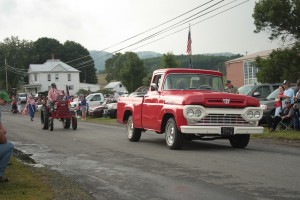
Antique vehicles welcome so long as you bring candy for the kids.

No parade would be complete without horses...and a knight errant.
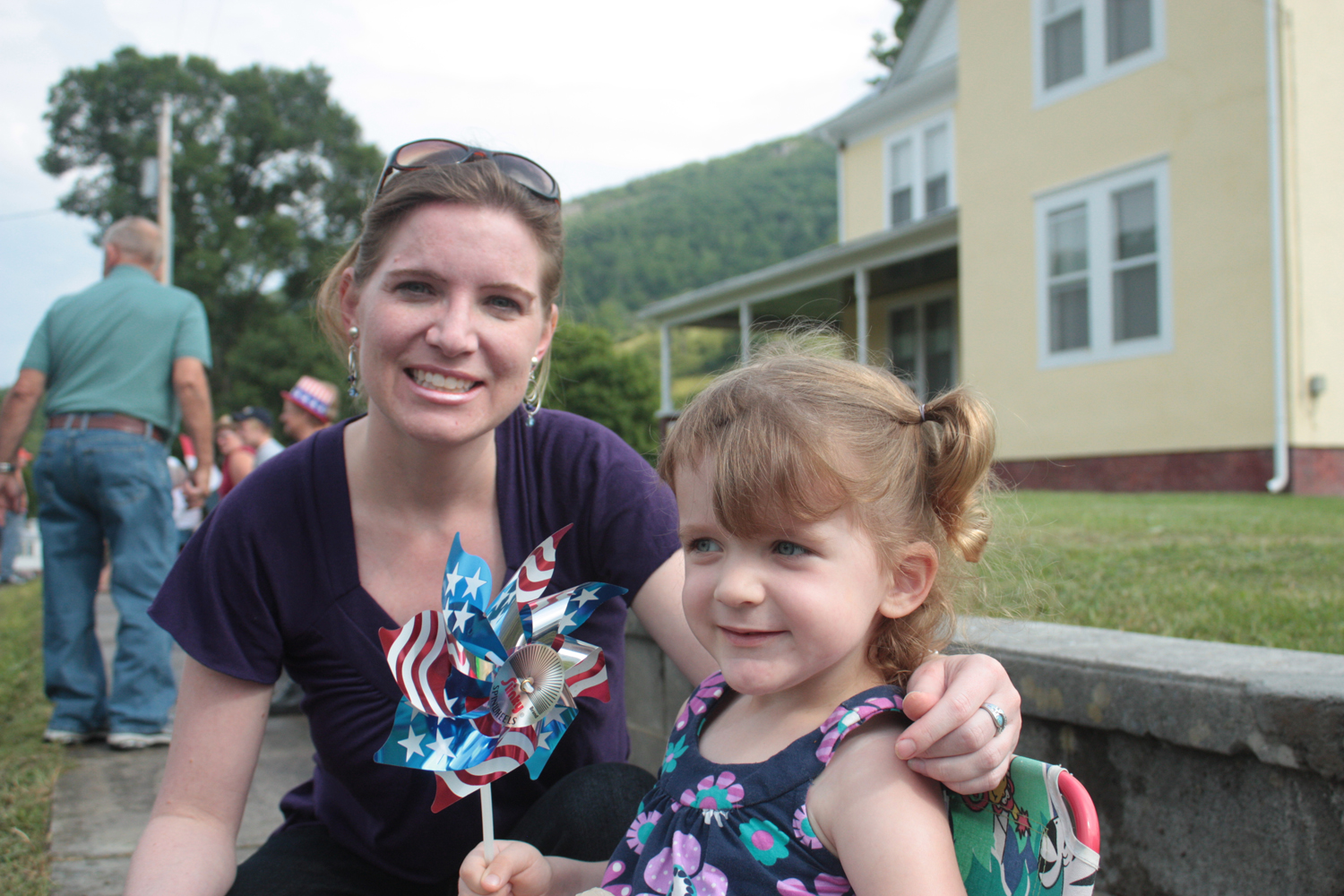
The author and her assistant
Posted by Deborah Huso on Jul 1, 2011 in
Travel Archives
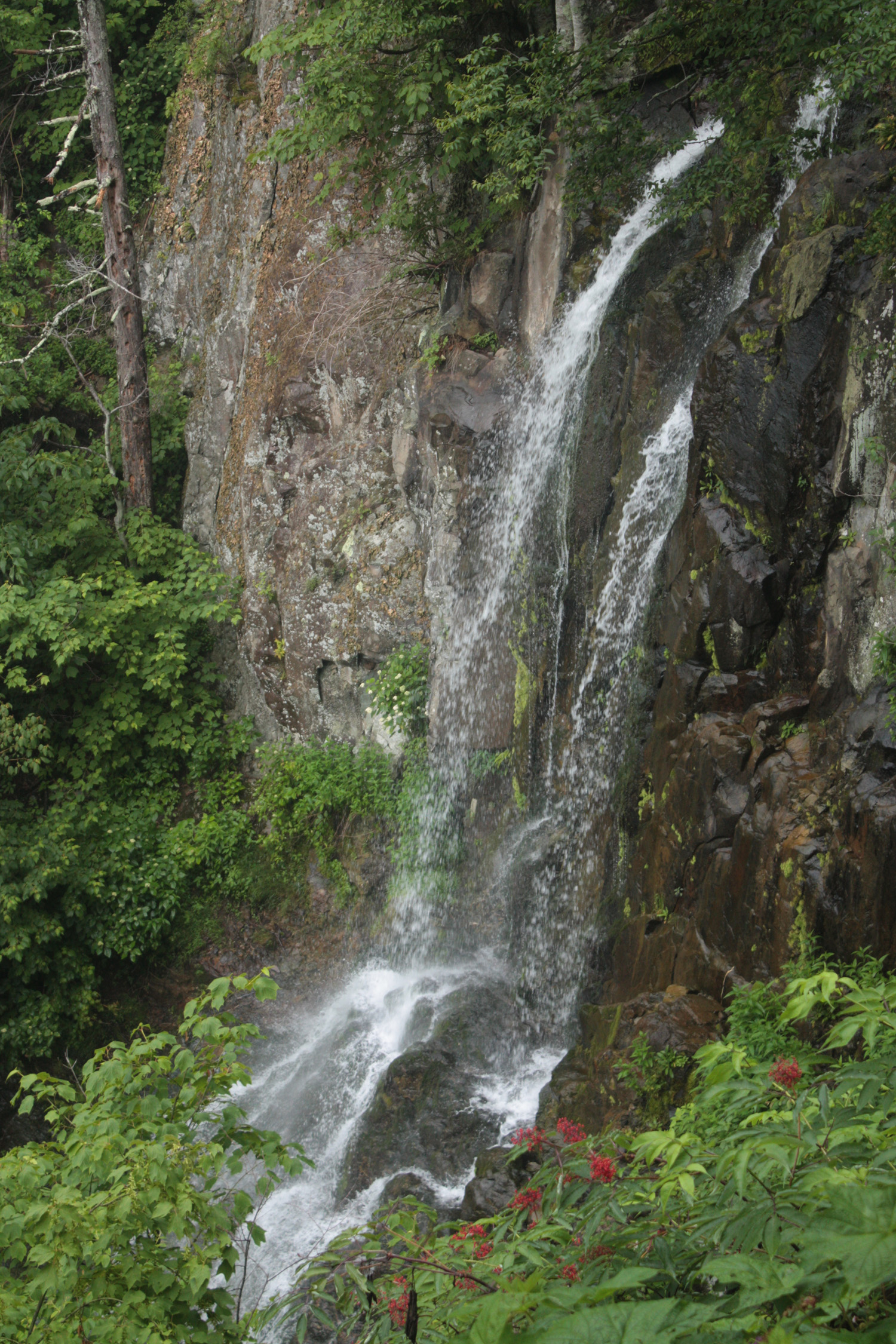
Lewis Falls
Two weekends ago, Dad and I set off for our annual Father’s Day hike, scouring Shenandoah National Park for a trail neither of us had hiked previously. Surprisingly, we found it just south of Big Meadows—the 3.3-mile circuit to Lewis Falls.
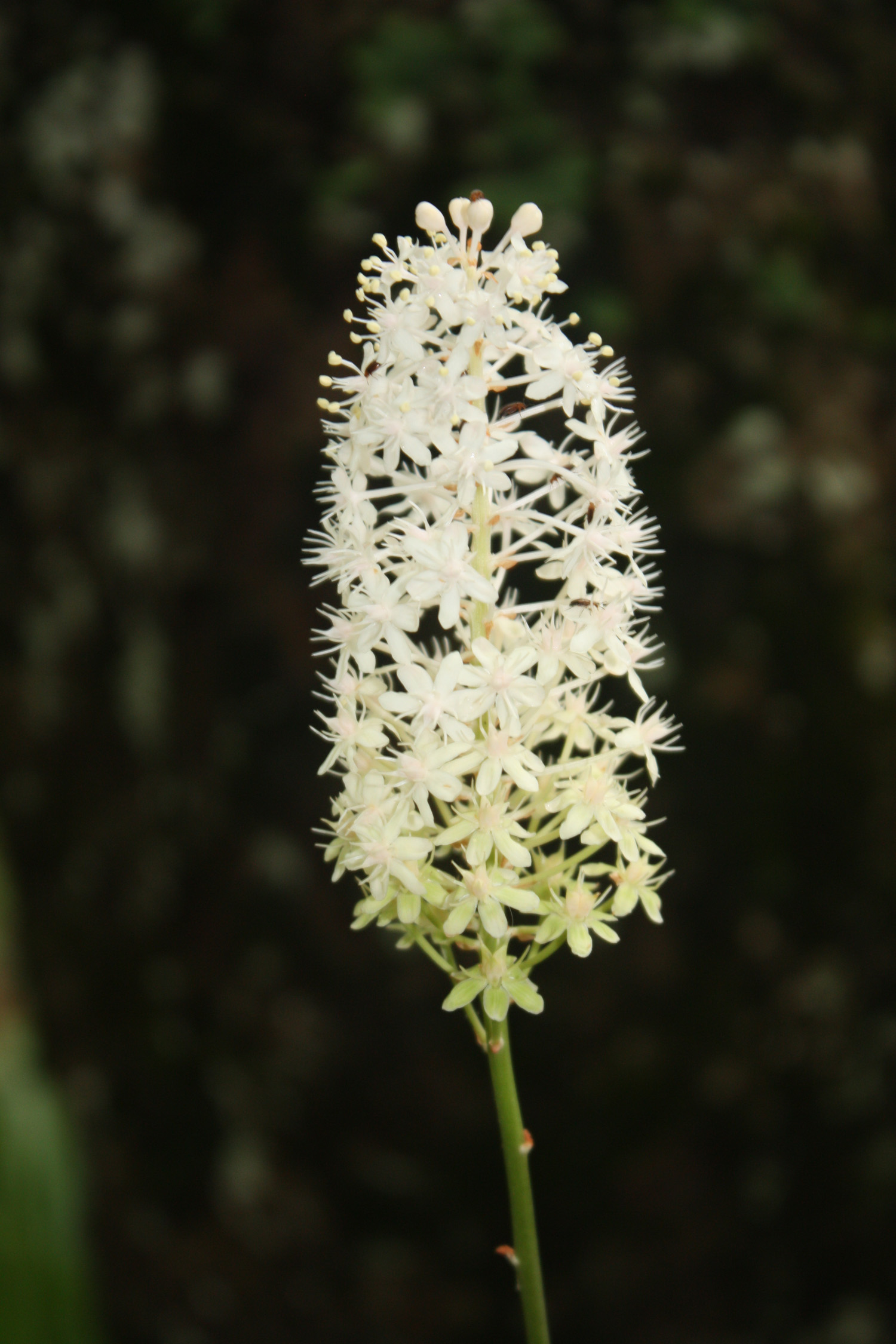
Fly Poison flower along the Appalachian Trail
Accessible via some rocky downhill switchbacks just north of the Tanners Ridge overlook north of Milepost 52 on the Skyline Drive, this trail is a good moderate hike though perhaps an ill-advised choice for those with bad knees, as the downhill trekking is pretty rough on the joints.
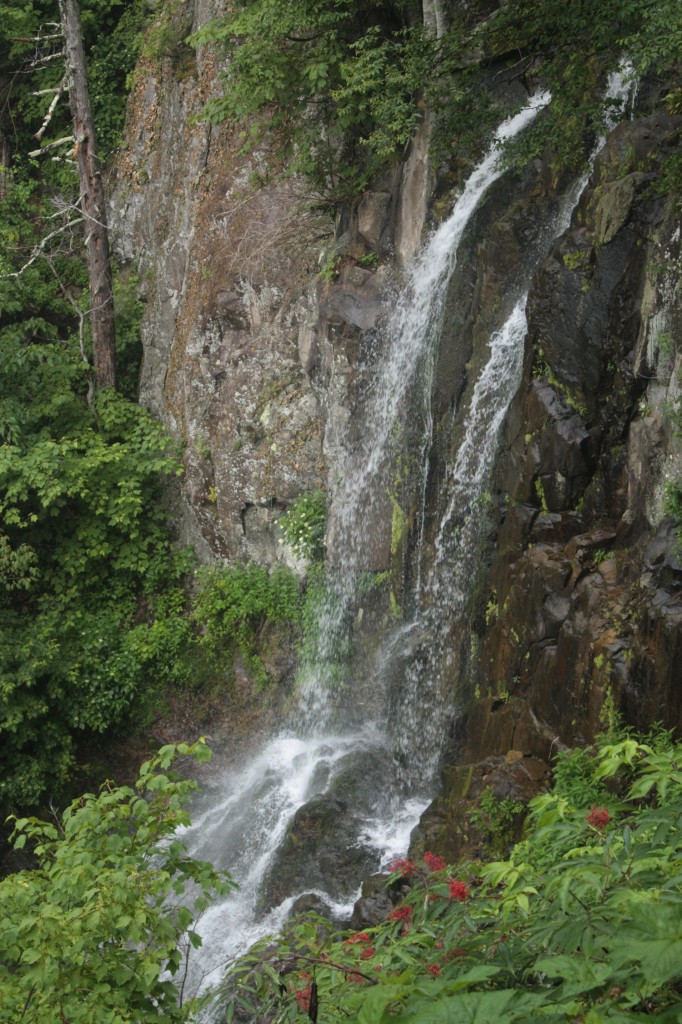
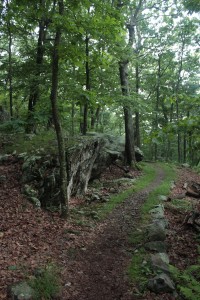
The trail meanders through fern carpeted woods, across small streams, until finally landing at an observation point above the falls. At 81 feet, Lewis Falls isn’t spectacular, but it’s worth the trek with its delicate veil-like cascades coursing over a granite face.
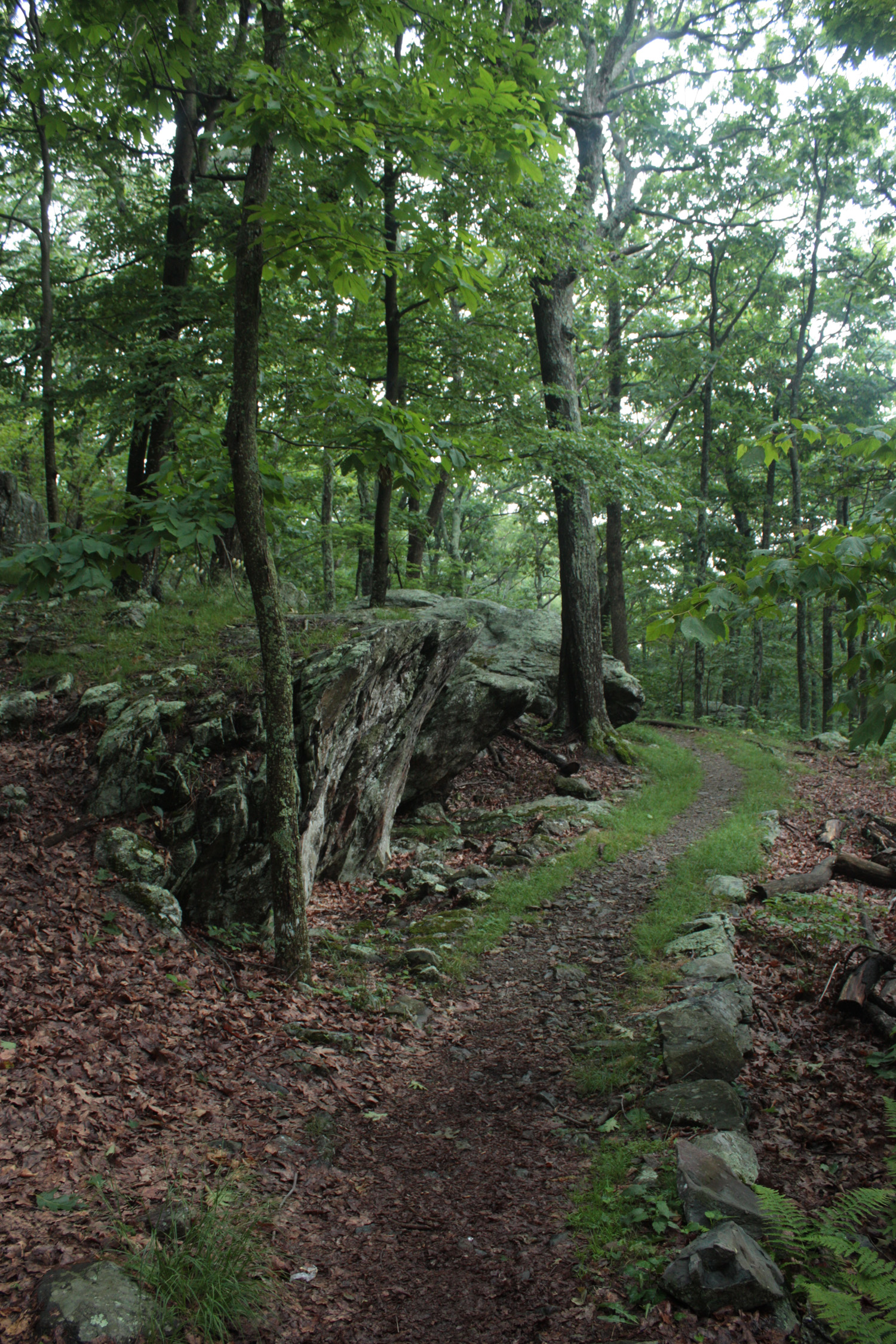
If you make the full circuit here, which we did, the second half of the hike climbs up toward Big Meadows Lodge, where you can stop and grab a blackberry sundae before heading back down the trail. The hike then follows the Appalachian Trail south of the lodge back to the parking area.
The Appalachian Trail section of the hike is an excellent spot for catching glimpses of wildlife if you’re quiet enough. Two hikers who preceded us down the trail ran into a black bear, and we also came within several feet of a springing fawn.
Appalachian Trail below Big Meadows Lodge
Posted by Deborah Huso on Jun 19, 2011 in
Travel Archives
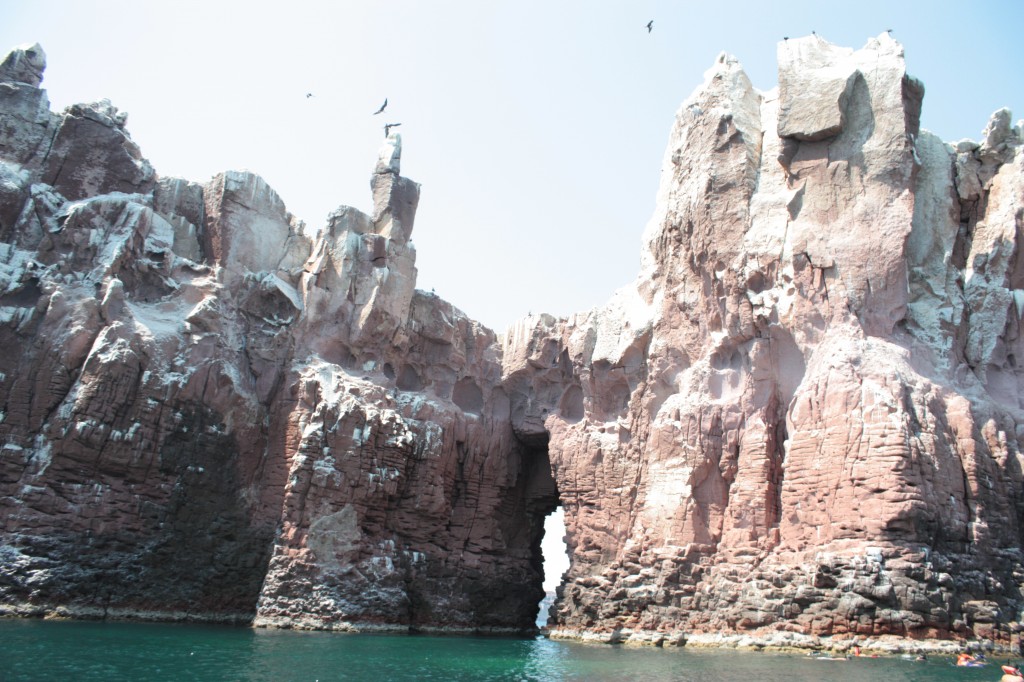
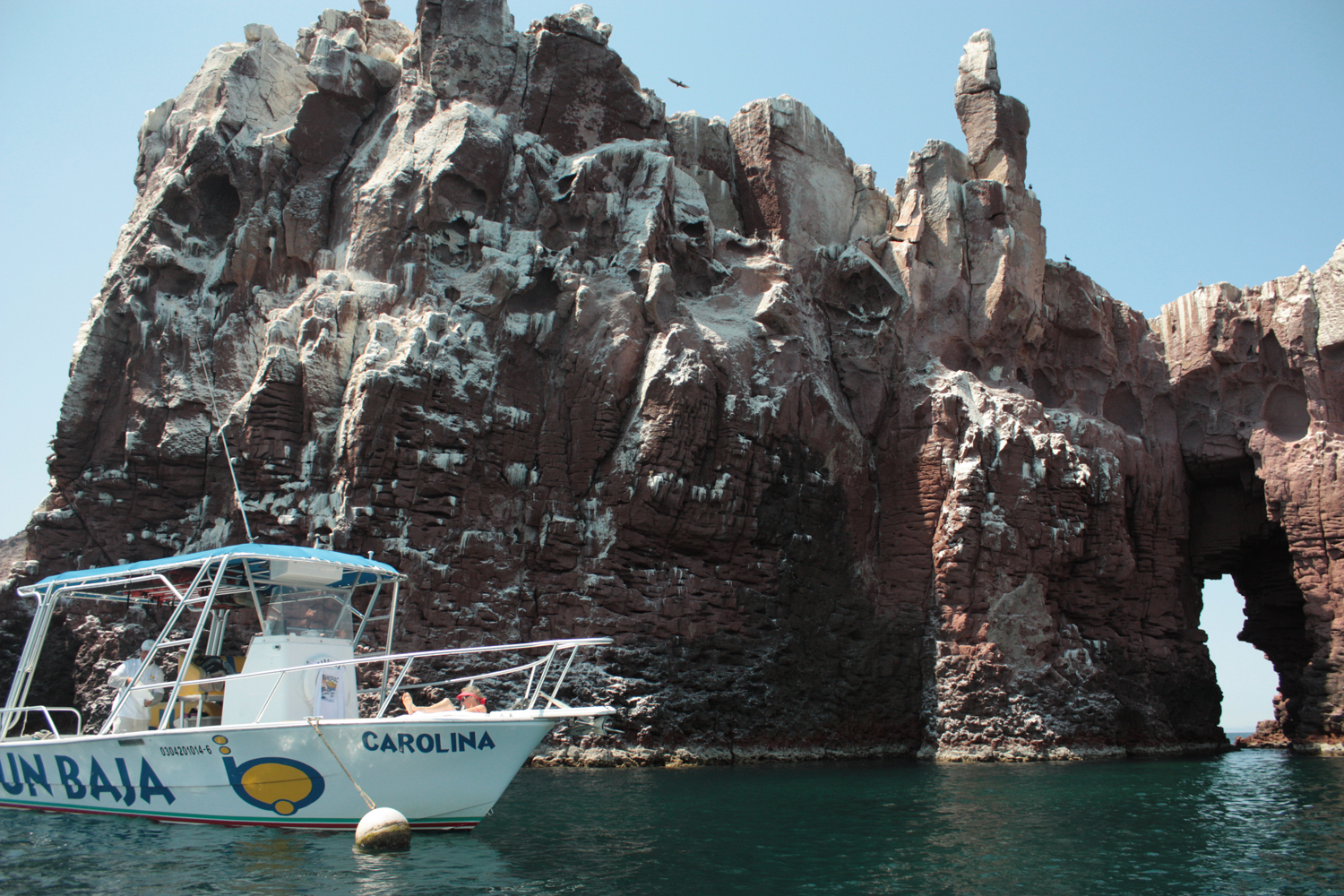
That's not white cake frosting on the rocks; it's accumulated bird poop.
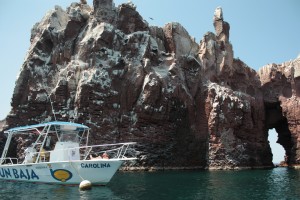
After being chased by Steller sea lions in Alaska’s Glaciery Bay (check out the Alaska section of this blog for details), I wasn’t particularly enamored of the idea of swimming with California sea lions in Mexico’s Sea of Cortez. But as it turns out, the 400 to 600 sea lions that call this protected gulf home are a good deal friendlier (or perhaps lazier) than their Alaska cousins. Friendly enough to swim with, in fact.

I'll take a helicopter with my yacht.
La Paz based Fun Baja offers day-long excursions into the Sea of Cortez for $110 USD per person. The price includes transfer from your hotel as well as any snorkeling, scuba, or kayaking gear you may need. Fun Baja departs from the marina at Costa Baja, a luxury resort just outside La Paz. The marina also plays host to the yachts of the well-heeled who visit this sea and desert paradise.
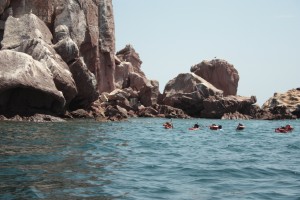
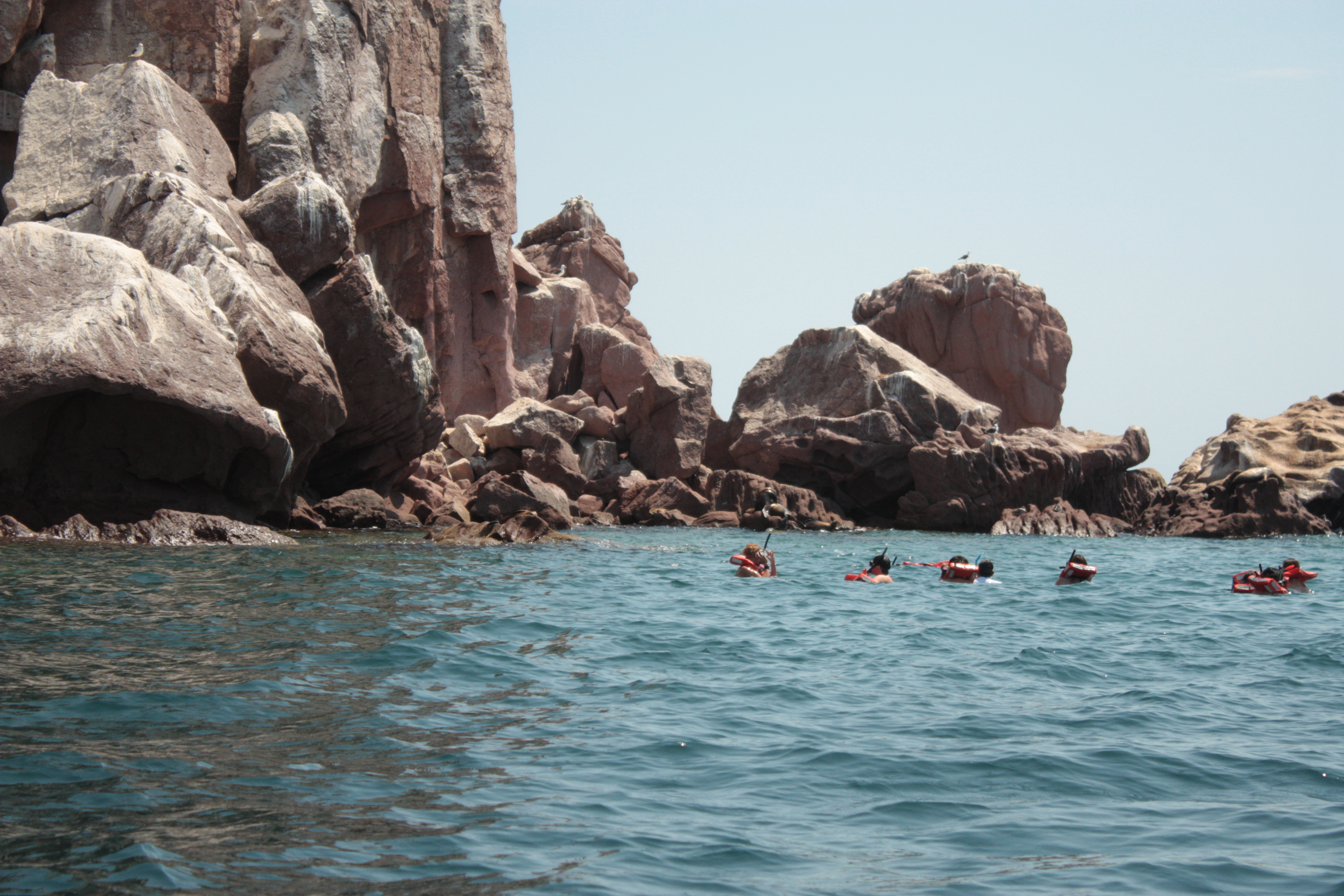
Snorkeling in the Sea of Cortez
Among the activities Fun Baja offers is the opportunity to snorkel with sea lions. Good luck getting the creatures to leave their sun-warmed rocks and hop into the water to play, however. Never fear though. Even if you can’t coax a 900-lb. playmate into the water, you can still enjoy swimming among the sea’s incredible array of fish. But slather on the sunscreen first.
Fun Baja also offers scuba diving, kayaking, fishing, and whale watching. The Sea of Cortez is one of only 10 places in the world where juvenile whale sharks congregate, and in winter months, you can see sperm whales (of Moby Dick fame) swimming in this sea that has enjoyed government protection for almost a decade.
Skidding along these turquoise waters with barren desert mountains and rock formations rising on all sides, it’s hard to imagine humans calling such a place home outside the city limits of La Paz, but more than a few Mexican families still make their livings in the Sea of Cortez as traditional fishermen, living on isolated islands with no running water and no electricity. The Mexican government allows them to stay so long as they continue to live in this traditional way, but if the families leave, they lose claim to their island homes forever.
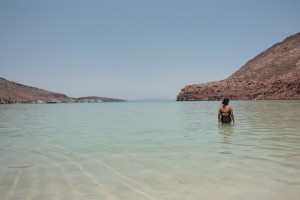
Secluded swim beach off Espiritu de Santos Island
Fun Baja will also anchor off Espiritu Santos Island and ferry passengers to a private white sand beach, where they can enjoy lunch, cocktails, and clear blue-green water rife with fish. Swimming in the sea here is something like a liquid massage as the water changes from warm to cool and back again.
Posted by Deborah Huso on Jun 18, 2011 in
Travel Archives 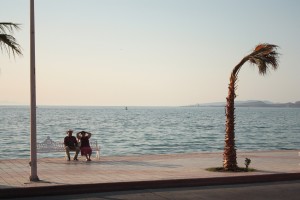
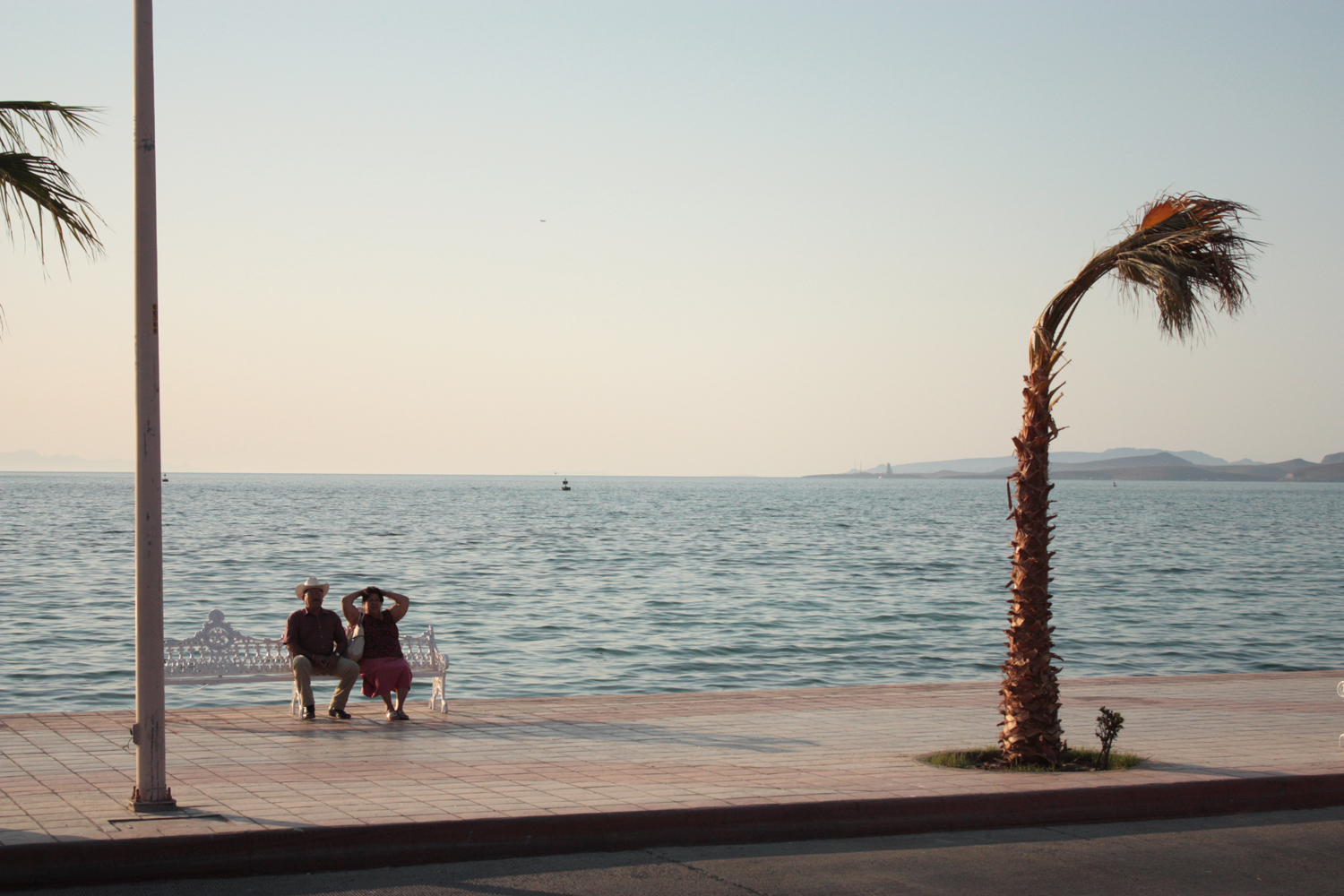
La Paz boardwalk fronting the Sea of Cortez
Cabo San Lucas has long been the destination of choice for visitors to Mexico’s Baja California Sur, part of the second longest peninsula in the world. But for those who would prefer to skip the build-up of a much too popular resort destination that is also a fave of the college crowd, La Paz, about a two-hour drive north of Cabo, is the place to go. The capital city of Baja California Sur, La Paz has nevertheless long been overlooked by the more conventional tourist…and that’s a good thing. Because what you’ll find in La Paz on the glistening Sea of Cortez (as the Gulf of California is typically called by Mexicans) is an unspoiled desert landscape on a protected sea and a community that retains the flavor of Old Mexico.

Costa Baja's lobby overlooking the pool
This is not to say La Paz is without development. Resort developers have finally discovered this desert beach paradise, but those that are here claim they are dedicated to preserving the pristine landscape and waters that surround the city. Of course, that remains to be seen. The good news, however, is that posh accommodations are available sans the typical tourist crowd. The best place to check into is undoubtedly Costa Baja, La Paz’s first five star resort with gulf front rooms outfitted with modern decor, including glassed-in showers and private balconies overlooking the sea. And while Costa Baja offers the perfect environment in which to take it easy with its own private white sand beach and nighttime gulf breezes to die for, the more adventurous traveler will enjoy the easy access the resort provides to the UNESCO World Heritage Site–the lovely Sea of Cortes.
Adventure on the Sea of Cortez with Fun Baja
Fun Baja will pick up guests right at Costa Baja’s marina for day-long excursions into the gulf on one of its seven yachts with activities ranging from snorkeling with sea lions to scuba diving. Stay tuned for the lowdown on how to best spend the day on the Sea of Cortes….
Posted by Deborah Huso on Jun 7, 2011 in
Travel Archives 
The Liberty Rose in Williamsburg
I’ve known about The Liberty Rose in Williamsburg since my grad school days at William and Mary but only recently had the opportunity to stay there. This luxurious bed and breakfast on Jamestown Road only a mile from Colonial Williamsburg’s Merchant’s Square is something of a rarity in this tourist town, which is dominated by chain hotels.
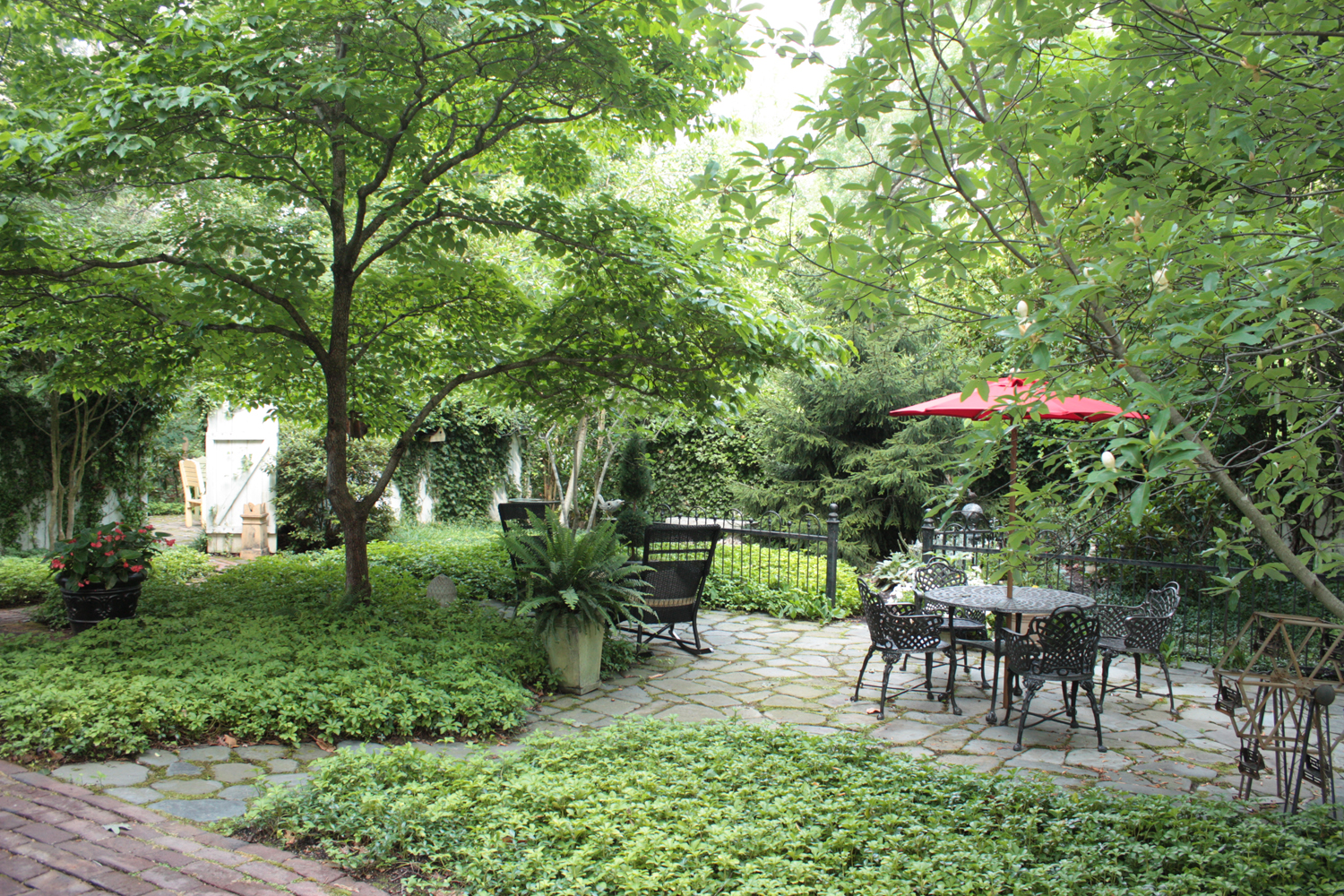
Situated under towering oak, beech, and poplar trees, this four diamond inn is colonial in style on the exterior but full throttle Victorian on the inside with decadently romantic rooms swathed in jacquard and velvet. Surrounded by sumptuous English gardens rich with blue hydrangea, creeping ivy and ferns, fountains, and cushioned rocking chairs, the Liberty Rose is something of a haven from the bustle of Williamsburg, and one is almost tempted not to leave.
All four rooms here are lovely, but my favorite pick is Magnolias Peach, which occupies an upstairs wing unto itself. Light and airy with windows on three sides, the room has a four poster Queen Anne bed dressed in soft as silk 800-thread count sheets and a quiet alcove with chaise lounge and electric stove.

Gardens at The Liberty Rose
Breakfast is beyond indulgent, and forget counting calories. It’s hopeless to even worry about it. Fresh fruit dishes followed by oozing ham and cheese croissants, scrambled eggs, and warm and gooey pineapple upside-down cake are the order of the morning here.